
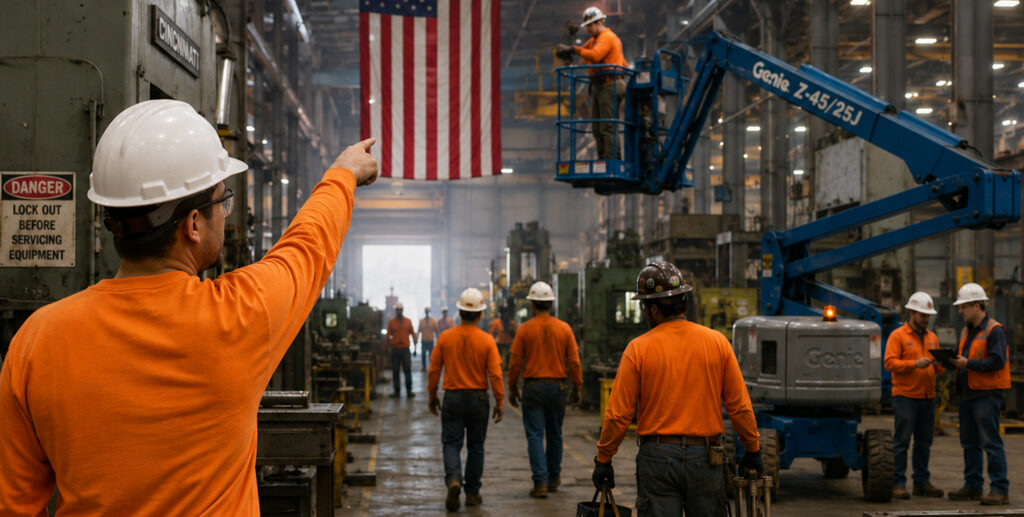
As the United States gears up to celebrate its 250th birthday in 2026, there’s a growing movement to mark the milestone in a way that feels genuinely patriotic: by choosing products that are Made in America. And it’s not just nostalgia driving the trend. It’s economics, national pride, and a renewed appreciation for the workers and manufacturers who keep the country running.
The Alliance for American Manufacturing (AAM) has been spotlighting U.S.-made goods for years, but the lead-up to America’s semi-quincentennial has given the effort new energy. Consumers are increasingly asking where their products come from and whether their purchases support American jobs or foreign supply chains. According to a recent Consumer Reports survey, 92% of Americans say they prefer to buy U.S.-made products when given the choice, and 78% say they’re willing to pay more for them.
That shift is happening at a moment when U.S. manufacturing is experiencing a quiet but meaningful revival. More than $650 billion in new factory investments have been announced since 2021, driven by semiconductors, electric vehicles, batteries, clean energy, and reshoring efforts across dozens of industries. The manufacturing sector has added hundreds of thousands of jobs, and domestic production is expanding in places that haven’t seen new industrial growth in decades.
But the Made in America movement isn’t just about big factories and billion-dollar projects. It’s also about the small and mid-sized manufacturers, the family-run workshops, craft producers, and regional brands that give American manufacturing its character. From Pennsylvania steel and Vermont woodcraft to Michigan furniture and North Carolina textiles, these companies represent the craftsmanship and ingenuity that built the country in the first place.
AAM’s latest roundup highlights dozens of these makers, offering consumers a way to celebrate America’s 250th with products that reflect the country’s history and values. Think classic American denim, hand-tooled leather goods, U.S.-forged cookware, locally made toys, and home goods built to last. These aren’t mass-produced imports; they’re the real thing.
And the timing couldn’t be better. The pandemic exposed just how fragile global supply chains can be, and many Americans are still frustrated by shortages, delays, and the realization that so many everyday products come from overseas. Buying American-made goods is one way consumers feel they can take back control, supporting local jobs, strengthening domestic supply chains, and reducing dependence on foreign manufacturing hubs.
There’s also a national security angle. The Department of Defense has repeatedly warned that the U.S. relies too heavily on foreign suppliers for critical materials, electronics, and industrial components. Strengthening domestic manufacturing isn’t just good economics; it’s a strategic necessity.
As AAM puts it, celebrating America’s 250th with American-made products is about “honoring the workers who built this country and the industries that will carry it into the future.” It’s a reminder that patriotism isn’t just fireworks and parades, it’s supporting the people and companies that keep the nation strong.
And honestly, what better way to celebrate a quarter-millennium of American independence than by choosing products made by the very workers who embody that spirit?
 Spotify
 Apple Podcasts
 Podbean
 YouTube
 Spotify
 Apple Podcasts
 Podbean
 YouTube