TRANSCRIPT
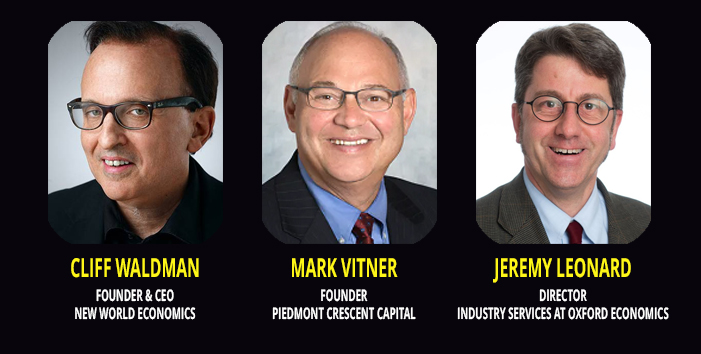
[00:00:21] Cliff: Good day everybody, and welcome to this week’s episode of Manufacturing Think Tank. I’m Cliff Waldman. I’m the host of the show, one of many on manufacturing talk radio. It is probably the central forecasting question of the day the United States is ensconced in a very difficult, very unpredictable, um, war with, um, a treasure’s enemy in Iran that is having global consequences.
[00:00:50] The question for us is, what is that gonna do to the US and really the global. Manufacturing outlook for that. We have two [00:01:00] top economists, both of them are veterans of this show to join us to help sort out the many dimensions of this difficult question. Mark Vitner. With 30 years in Wells Fargo investment Bank, founded Piedmont Crescent Capital.
[00:01:16] He analyzes the macro economy and publishes numerous economic reports including the CAVU Compass. Originally from Atlanta, mark holds economics degrees from the University of Georgia and the University of North Florida with additional graduate work at the University of Florida. He’s a member of the National Association of Business Economics, where I got to know him and completed the advanced training and economics program at Carnegie Mellon active in his his community.
[00:01:45] Marco co-founded the Charlotte NAAB chapter and shared the foundation for the Charlotte Jewish Community. He previously chaired the California Chamber’s Economic Advisory ca uh, council and serves on the Joint Advisory Board of Economists for the [00:02:00] Commonwealth of Virginia. Mark’s insights are featured regularly in major publications and he frequently appears on N-C-N-B-C, where I’m sure quite a few of you have seen him and, and other networks as well.
[00:02:14] Since joining Oxford Economics in 2012, Jeremy Leonard has been responsible for overseeing the work of the industry forecasting team and managing the operation and output of Oxford Economics global industry model, offering robust forecast and powerful scenario analysis. This to help its clients navigate the highly uncertain and unpredictable cross currents of economic and geo geopolitical forces.
[00:02:41] Not never more than right now. Prior to joining Oxford Economics, Jeremy ran his own consulting firm based in Montreal, Canada for more than a decade, providing a variety of economic analysis and forecasting related to industrial performance with a particular emphasis on competitiveness and [00:03:00] offshoring and reshoring.
[00:03:01] Among his clients were the Washington DC based Manufacturers Alliance, and he wrote several path breaking reports on manufacturing costs for the National Association of Manufacturers. Born and raised in Washington DC and now based in London. Jeremy was educated at the University of Pennsylvania and McGill University where he received his MA in Economics, Summa Cum laude.
[00:03:29] Gentlemen, I welcome you back to the show.
[00:03:33] Jeremy: Thank you very much, cliff.
[00:03:35] Cliff: See both of you.
[00:03:36] Mark: To see you.
[00:03:37] Cliff: I’m gonna have the fun of starting with a bit of a trick question. The manufacturing data in the United States in the United States has improved a as of late. Uh, after 10 months below 50, the the Purchasing Managers Index and I, I, uh, I, for the benefit of our audience, it’s a, a widely followed survey index, which foreshadows sort of the [00:04:00] short term fluctuations in US manufacturing.
[00:04:03] That number has, was below 50 for 10 months straight, and the manufacturing sector was at a. A, a protracted slump, but for the past four months, it’s, it’s been above 50. Uh, 50. The Federal reserve’s measure of manufacturing output was more than 3% down in the fourth quarter of 2025, and almost completely rebounded in the first quarter of 2026. mark, let me start with you, given that, um, and, uh, can we say that there’s been any impact of the war so far on US manufacturing?
[00:04:38] Mark: Well on, on net, I, I don’t think there’s been a negative impact. I mean, there have been some positive impacts that, that you can, you can obviously see, which are defense replenishment and. Uh, sort of the rush to, to build factories, to, to, to help replenish stuff. So we, we’ve, we’ve seen, we’ve seen that play out in real [00:05:00] time, but, but I think that the war itself really hasn’t had any negative impacts because we had very lean inventories because of the tariff situation last year, and there just wasn’t a whole lot of places to cut because demand is held up reasonably well.
[00:05:14] And if anything, folks wanna carry a little bit more inventory given how uncertain things are. And since we’re less impacted by international trade, even though we’re a huge economy and we’re a huge part of the global trading system, but it’s a smaller part of our economy. The hit to the global economy has hurt us less than it has other nations.
[00:05:35] And I, I think that that’s playing a, a big role more recently. One other area that’s helping is that, uh, everybody’s now lining up to get, uh, get oil, fertilizer, everything else that we have in the United States. It’s not any cheaper here, but it, but we do have it, and a lot of places don’t.
[00:05:51] Cliff: Jeremy, what are your thoughts on that?
[00:05:54] Jeremy: Yeah, I mean, I, I, I think I broadly agree with what Mark says. I, but I guess, uh, living in Europe for so long has says, uh, [00:06:00] has, uh, tainted my, uh, optimism genes that I was born with, uh, in America. I mean, the way I read the data, I think you’re right. On a quarterly basis, yes, certainly things are strong, but if you look at the March data itself, you have seen some pullback in some sectors, not all, and I, I would agree with Mark on the defense side, on the ammunition, there’s certain segments like aerospace that I think will, will net on net, probably beneficiaries from what’s happening in the war.
[00:06:27] But there are a few sectors, actually, more than a few, um, where we’ve seen some pullback in March. and whether this is a trend or not is too early to tell, but some of them, including automotive, tend to be the ones that when you have an inflationary shock, which we, we are having, um, because we did have a pretty hot inflation number, and I think that’s going to continue. when you look at kind of the, the, the sensitivity of consumers, what, what do they stop buying when pressures on real disposable incomes come? Automotive is right there at the top of the list, [00:07:00] so I’m not about to say that that month decline, which was pretty significant, um, is a harbinger of the future, but I think we need to be a little bit sanguine about.
[00:07:11] Overall manufacturing because I think the demand destruction that will happen with the squeeze on incomes is going to mean that. Net on net. I think, you know, for manufacturing as a whole, I think there are going to be some certain sectors that are relatively small that are going to benefit, but I think there actually is going to be an impact as we look ahead.
[00:07:33] But Mark, I definitely take your point on inventories. ’cause I think that’s right because whenever you have uncertainty you are going to have build up. So, so we could see some, some sort of countervailing impacts there.
[00:07:44] Cliff: Mark, I, we, you know, the, the first thing economically anybody thinks about with the war to oil price is, is it possible that there are at least some manufacturing industries that are, are at, at least momentarily benefiting from higher oil prices?
[00:07:59] Mark: Well, [00:08:00] I, we benefit because, um, our, our, our plastics business is, is tied to natural gas, and we’ve got an abundance of natural gas and our domestic prices are very, very low. And so, so, uh, there’s a lot of shifting of production from Europe back to the United States, uh, just because of that. And so that, that’s played out fairly nicely for us.
[00:08:19] I mean, it, it, it’s always, it, it’s tough to say how we’re benefiting from other people’s troubles, but, um. But you know, we, we are fairly self-sufficient in, in most things, and I, I’ve, I’ve spoken about this since the work came out and I said, I don’t wanna seem like I’m a Pollyanna. I said, for us it’s not a question of not having the stuff.
[00:08:37] We’re still gonna have to pay that. We have this, we have almost everything we need. We’re not gonna have, we’re gonna have relatively few shortages, but we still face the price effects. And those, those price effects are, are, are going to have some income effects. And, and, and I share the caution on the auto sector.
[00:08:53] Whenever you have a rise in, in gasoline prices, we tend to see a, a, a, a drop in the auto sector. But what I think [00:09:00] is very unique to this period in time is that we’ve got some structural shifts that are very long running, and one of those is the buildup of a build out of AI and it and its infrastructure.
[00:09:11] And I hate to focus too much on that because everybody focuses a lot on that. Something that’s been kind of lost is that, uh, Boeing is going to increase their output by 15% this year. And when Boeing increases their output by 15%, that’s, that’s 737 Max’s and 787’s That, that’s got a huge follow through. And, and then we’ve, had reshoring that, that really was going on before the pandemic. It’s kind of gained strength since then. It’s very apparent in the pharmaceutical industry and so, and there’s a few other sectors, but what all of those areas have in common is they’re very capital intensive.
[00:09:51] A lot of the capital equipment is made here in the us. With the exception to ai, we’re importing a lot of that from Taiwan, but, but a lot of it’s made here in the US It’s [00:10:00] long live. It’s not going to be interrupted because of the war. People are still gonna take their GLP ones.
[00:10:07] Cliff: Jeremy on oil prices.
[00:10:08] Jeremy: Yeah, no, I think, I think you, you hit the nail right on the head in terms of the, the impact on the US because I completely agree with everything you’ve said about the fact that the US is self-sufficient. I tend to think about chemicals, feed stocks, and there’s all sorts of ways in which the oil price feeds through the broader economy and the, the chemical channel is the main one because as we all know, chemicals are essentially used everywhere and you’re absolutely right in terms of the, you know, shortages are not an issue really for the us.
[00:10:37] They are an issue at. Actually in other parts of the world, um, particularly in China, we, we monitor the, uh, the operating rates of sort of, you know, chemical factories and polymer factories. For instance, I’ve seen their operating rates go off a cliff. Now it’s hard to put cause and effect, but my hunch is that it’s actually risks of shortages and possibly actual [00:11:00] shortages, because if we think about the dependence of various regions on the Middle East for fossil fuels.
[00:11:07] It’s about 70% in, in the APAC region. Now China’s a little bit lower at about 50%, but you know, the, the, the ratio I think in the US is less than 10%. And so, so what’s happening, I think in the US is that yes. Essentially what it means is us users of, uh, fossil fuels are taking market share. I’m thinking more about the chemical sector here.
[00:11:29] They’re taking market share, but it is a market share that isn’t growing, probably isn’t going to grow nearly as fast as we as it would have otherwise. And coming back to automotive and various other end markets. So you’ve got the situation where you’ve got demand destruction. From the impact on IM incomes, but you’ve got this increasing market share because of this competitive advantage of the us because of the development of share gas, shale gas.
[00:11:52] And I think, you know, I think you’re right. I mean this reshoring story, and it’s quite interesting ’cause I think we’re gonna talk about that in more detail. [00:12:00] But, you know, the, the fact that the, the increase in investment in more manufacturing capacity in the US actually predates the tariffs by quite some time.
[00:12:09] And so there, there’s kind of a timing issue of, of, you know, what, what, what brings this about. And, you know, you can, we can argue about what they are, whether it’s the chips act, whether it’s the IRA. Uh, whether it’s simply the need to expand capacity in the wake of this huge increase in post pandemic demand.
[00:12:26] So I would agree, and in fact, you look at the data and the, the share of manufacturing in GDP has actually started to increase. And the question is, you know, from a political perspective, who’s responsible? but yeah, so I mean, I broadly agree with sort of what you’ve said, mark in that regard.
[00:12:42] Cliff: Mark, let, let’s do a full parsing now. And I, I think that, that, that our audience would have this question. I mean, the US has a fairly broad and diverse manufacturing sector. If you had to pick the, let’s say three, four industries that are [00:13:00] gonna eventually see the most impact, the three or four manufacturing industries in the United States that are eventually gonna see the most impact from the Middle East conflict.
[00:13:11] Um. What would you say they are?
[00:13:14] Mark: Gosh, you know, in, in terms of, well, I mean, on, on the positive side, it’s definitely going to, to be the, the defense industrial. Base. I mean, we’re, and we’re seeing that, uh, all across really in the Sunbelt, where we’ve seen a, a, a lot of factories that are being expanded to make, uh, the interceptors that are used to, to shoot down missiles and, uh, and new technologies to shoot down drones. we’re also seeing it in ship building. And in ship building. We are short of capacity. The new Newport new shipyard is where we build aircraft carriers, is where we build nuclear submarines. Uh, but we can’t, we don’t have enough capacity there. We don’t have enough people. And because of that, um, Huntington ings has been buying up shipyards [00:14:00] along the Atlantic Coast and the Gulf Coast, and they’re building components of those ships and other shipyards and putting ’em on barges and then floating in the Newport News to where they get assembled so they can add a little bit more capacity.
[00:14:13] And it’s another thing that’s, it’s an industry, it’s, it’s not necessarily tied to the war, but, but you know, when the Iran took the hostages in 79, 1 of the things that came outta that was the Osprey. It made us. Rethink about defense technologies and, and, uh, and I, I think that the, the, the, the, the crisis and the strait of our moves has got us thinking about the, the, the, the urgency in, in rebuilding our fleet.
[00:14:36] And, uh, and there’s a lot of things that are gonna be going on there, you know, on, on the negative side. You know, I do worry about things tied to agriculture, right. You know, when I, when I heard about fertilizer and I, I was like, you know, everybody. They, they wanna panic right? At the same time. I’m like going, okay.
[00:14:50] For the, for the most part, I mean, I, I’ve never been a farmer, but I know that, that, uh, that the fertilizer’s already on the, in the ground for, for, for this crop. [00:15:00] It’s the, uh, it’s the crop that’ll be coming later where people have to make tougher decisions about what they’re going to grow because maybe it doesn’t make sense. they can get the fertilizer, but it costs so much money that, that it, that it, uh, that it, that they won’t be able to make a profit. They won’t be able to, so it doesn’t make any sense for them to take the risk because it is a high risk endeavor. Uh, so I do worry about, uh, agricultural products and, and food products and, and what, how that’s going, what’s going to happen, uh, later this year.
[00:15:27] And then consumer durables. Um, uh, I do a lot of work with the furniture industry. It’s, it’s important in this part of the country. Uh, even though much of it has gone to China and, uh, but it’s still, um, the Carolinas, Mississippi, uh, we still make a lot of furniture and furniture’s one of those things that when money is tight, you can get, get by with what you got or, or you can go buy a used, you can be able to go buy something used if you want.
[00:15:54] Uh, you don’t have to go out and buy something new, uh, on. And so. That’s been an [00:16:00] industry that, that boomed during the pandemic when everybody was staying home and it’s really struggled since. And I, I think that’s, that’s an industry that’s a casualty. Um, and, and it’s not just, the, the weakness here.
[00:16:12] Uh, it’s also that we import so much stuff from China and the shipping cost has gone up so much that, uh, and a lot of the stuff we import from China is at relatively low price points. And, and, uh, and so it’s just gonna be more expensive. And I, I don’t know that, uh, that, and, and with incomes under pressure, that, that, that it’s going to be able to work itself out.
[00:16:32] Cliff: Jeremy was the three or four top man US manufacturing industries impacted by Iran.
[00:16:38] Jeremy: Yeah, I mean, I would come back to what I said earlier about the, uh, the. Impact of the, the squeeze on household incomes. And, and, uh, mark you alluded to it, in terms of furniture, we’re, we’re talking about sort of discretionary items that you can put off or you can buy something used or whatever it is. so sectors like automotive, we ma we’ve [00:17:00] made big downgrades to our forecasts and that’s really on the kind of demand side, the, the sort of household income squeeze side of things, but the other areas.
[00:17:09] That I think are important are on the supply and cost side. And this comes back to the point about, as you mentioned, mark, you know a lot of things where the US may not have shortages. Uh, prices are set globally and one of those is actually the petrochemical sector. Most petrochemicals are actually priced globally, which means that even though we have a lot of supply, the costs of using that, uh, is going to go up.
[00:17:31] And chemicals are used everywhere. We’ve done some supply chain analysis says, well, yeah, it’s everywhere, but the places where it’s most heavily used or, well, the automotive sector is one. So you’ve got both the demand squeeze and you’ve got the cost push. So automotive is kind of doubly hit, I think, by what’s happening in the, uh, in the ran war.
[00:17:50] But if we think about things like packaging, so thinking about the food cosmetics, um. Uh, a lot of that is going to be plastics. And, um, so [00:18:00] the, so those are the kinds of sectors that, you know, I would say that, you know, on the food side, the income squeeze has less of an income squeeze has less of an impact on food and sort of the essentials.
[00:18:12] It will have an impact on the margin. But then you have these cost pressures and that’s going to cause, uh, some headaches in those sectors. So. I mean, and I, I would agree sort of on the, on the plus side, I think, I think Mark and I both agree sort of the, the defense side, the aerospace, not only the war itself, but we’ve also got quite a lot of policy, uh, either, uh, committed or announced in terms of increased defense spending.
[00:18:35] So I think that, I think that’s how I’d summarize my view on sort of the, sort of the key sectors.
[00:18:39] Mark: Yeah, and I, I, I’d come back to just add on, on your petrochemicals, and I think that, um, while the US has always had a, a, a key competitive advantage in there, I think that, that one of the outcomes of this is that a lot of countries are, are going to. make certain that they have more exposure to our market if they didn’t have any exposure to our market.
[00:18:57] In terms of it, it’s, uh, when, [00:19:00] when you talked about the, the, the, um, dependence that we have on the Middle East, it’s kind of ironic. We really don’t have a whole lot of, any dependence on the Middle East. The reason why we have that 10% is because they didn’t want to be, have, be so dependent upon selling just to Asia.
[00:19:15] And so they went out of their way to establish facilities and so they’re actually selling it to their own affiliates here in the United States. So it’s, uh, so, so I think we’re going to see that kind of in reverse, that that same thinking in reverse, where people are gonna say, we need to rever, we need to diversify our supply mix so that we, that we, uh, are, are less subject to, to shocks.
[00:19:37] Which, you know, really since, um. Since we had the fo shock of Y 2K, we’ve been hit with nothing but shocks ever since.
[00:19:46] Jeremy: No, and I think, I mean, over here in Europe, I, it is a big issue because here in Europe, the chemical sector is very dependent on NAFTA based, uh, refining still. Um, and so the result is that even though gas prices here [00:20:00] in Europe haven’t increased nearly as much as the Russian were, we’re kind of hostage to the fact that crude oil prices have gone up.
[00:20:06] And so, so we’re seeing a lot of, uh, we’re seeing a lot of migration of production, uh, certainly out of Europe. Some of it’s going to Asia, some of it’s probably gonna come to the US I would guess. but that, that’s a, that’s a huge issue here in Europe, the chemical sector. So I may, I mean, cliff, you, you sort of directed your question to the US but I can tell you that over here, energy intensive sectors like chemicals.
[00:20:31] Uh, building materials, pulp and paper, they’re really, really worried because they’re just, they’re already reeling from the, from the impacts of the Russian War, which again, because of the domestic supply in the us there’s it, it was never really an issue. The price of gas, let’s say, or the price of industrial electricity that’s generated by gas.
[00:20:49] Cliff: in the US affordability is, is just a, a, an escalating, uh, source of concern and, uh, and, and discussion. And for, you know, the average, uh, [00:21:00] uh, US household is now portrayed as being hit hard by gas prices being hit hard by food prices for some time now, and the decisions that they have to make, eh, can I, do I really afford those medicines now?
[00:21:14] If I have to put food on my table, can I really afford, uh, you know, that furniture, if I have to put my food at them, decisions that they have to make away from other things to be able to put gas in the car and food on the table. those are gonna be residually impacted, uh, industries and there could be many of them, you know, uh, within the, um, the, um, you know, the, uh, US economy, the US manufacturing sector.
[00:21:39] Jeremy: But I don’t, but I don’t, but Cliff, I, I don’t think we should forget about the, uh, the, about the impacts of fiscal policy, though.
[00:21:45] Cliff: Yeah. Right, right.
[00:21:46] Jeremy: because I mean, we do have this one beautiful bill act that has started to send money through. Now we, we’ve done some analysis and it’s clear that the tax refunds are not going to completely offset the adverse impact of high [00:22:00] gas prices.
[00:22:00] Let’s say. Uh, we’ve done some analysis. It’s, it’s not enough, but, but it is a, a kind of countervailing force, and I think you’re seeing the same thing. Um, like if we look at the CapEx cycle for instance, I mean, a lot of that is driven by ai. It’s clear. But even if you look at some of the non-AI sectors, which have been very morose last year. we’re starting to see some evidence of, of broader capital recovery. I think we’re, we’re gonna have a headwinds from the war, but I think, I think it is very important to, and I think you, you sort of alluded to this in your opening comments, mark, is that fundamentally the, the, the kind of manufacturing economy is, has had quite a lot of momentum going into this war.
[00:22:43] So, so these are headwinds, but they’re headwinds against, you know. I would say the policy stance is, is in a place that it’s, you know, we, we have some forward momentum. This, this is my optimism coming through. I’m, I’m kind, I’m kind of torn between two [00:23:00] continents. If, as you can see.
[00:23:01] Mark: well, I, I’ve been, I’ve been pretty optimistic about it and I’ll tell you that the one thing that, that hasn’t gotten as much attention, ’cause it, it, it’s not above the key 50 line, is if you look at the diffusion index and the employment report. In the, uh, the manufacturing numbers, the overall diffusion index is over 50, but the, uh, the manufacturing number is still below 50.
[00:23:19] But, but it shows the same magnitude of the improvement. And it, it is one of the things that I always like to, to remind people is that the manufacturing sector is responsible for the cyclical swing in the economy from when we, we go from underperforming to, to outperforming our, our, our alarm run potential.
[00:23:36] And I think that’s where we are right now. And so. That’s one of the reasons I have a, a, a strong outlook for the year. I mean, I,
[00:23:42] Jeremy: Yeah, I mean it’s absolutely
[00:23:43] Mark: feel like I have to pinch myself each time that I get finished putting the numbers together because I was like, really gonna be that good.
[00:23:49] Jeremy: We do a lot of cyclical analysis and, and I mean, there’s the, the underlying momentum, as you say, industry is very cyclical, and we’re at a point in the cycle where there’s a, there’s a natural [00:24:00] tendency plus all of the, all of the policy moves. And the fact that, okay, you know, the Fed funds rate is relatively low, long-term rates haven’t come down nearly as much, but you’re still getting this, you have, there’s this momentum effect that that is there.
[00:24:16] And I think that, you know, it’s, it’s headwinds against a, a desire. And a push for a relatively strong recovery. Now that said, we, because of the war, we don’t have a very bullish forecast for manufacturing in the US this year. You know, we’re sort of less than 1%, but it’s, as you say, it’s mainly because of the impacts of the income squeeze through the demand destruction, and through this petrochemical and this and this cost, cost driven, uh.
[00:24:44] Inflation, which is squeezing margins and you know, make companies unable to pass through costs to their customers and therefore that’s what’s sort of constraining investment.
[00:24:55] Cliff: le let me ask it. Jeremy, I wanna start with you, uh, on, on this particular question, I’m gonna ask [00:25:00] a structural question. We’ve had two sort of, essentially back-to-back periods of chaotic activity, tariff, chaos. And now the chaos, uh, is surrounding the, uh, the, the conflict in, in the Middle East. Has the, have they or do, do, will they, do you think precipitate any fundamental changes in manufacturing supply chains in, in the us?
[00:25:24] Jeremy: on the first question, we’ve done quite a lot of work around the, the question of tariffs and supply chains. And I think the question fundamentally sort of, uh, devolves into questions about reshoring, you know, in other words, you know, is, is this going to generate a kind of a kind of reshoring and, and, and doing more domestically supplied things?
[00:25:44] And I think I, it kind of comes back to the point that we were talking about, uh, early on in our conversation about, you know, yes, we have seen. Increases in manufacturing capacity and construction, but they haven’t come [00:26:00] after the tariffs. In other words, there’s a, there’s a timing issue. So yes, we’ve seen it, I would argue some of it’s coming from the chip stack.
[00:26:07] Some of it’s coming from the IRA, some of it’s coming from the, the ramp up in production and the need, you know, the fact that we had, uh, you know, product couldn’t get to market and there were shortages of all sorts of things. If you kind of look at what’s happened to the metrics around manufacturing, construction of new capacity, you don’t see much.
[00:26:30] And in fact, actually what you see in real terms and in nominal terms, you see a decline from, albeit from a very high level of manufacturing, construction, of new manufacturing facilities. So that’s one data point. On the other hand, you’ve got commitments. From companies who say they’re going to invest X hundred billion dollars over the next few years, and that’s, that’s there whether they do it, I don’t know anybody better than anyone else.
[00:26:58] And we also is [00:27:00] absolutely certain that we have anecdotal stories and there are companies who are reshoring. we haven’t really seen it in the data. So I mean, my view would be that yes, we have seen a manufacturing resurgence. Do I think it’s due to the tariffs? Not really. Now the second question about the war, that’s an, that’s one where it really depends on how long the war lasts.
[00:27:26] I think if it’s a very short war and we these and we have negotiations and somebody blinks on kind of the political and economic costs of carrying on this block, blockade of the strait of hormones, I think that there probably isn’t going to be, because if we think on the energy side. As, as we know, all three of us on this call, the, the sort of energy side of things.
[00:27:49] You know, the US basically operates pretty independently. Um, it’s drawing in, Sort of the petrochemicals and the immediate downstream sectors, [00:28:00] and in terms of whether that would impact, you know, broader supply chains. I really don’t see it. I’d be interested in what Mark has to say about this, and I would just add in Europe there may be some.
[00:28:13] Uh, movement on this because Europe, as we know, has seen very large energy crises, one after the other. The Russian crisis was really a game changer here in Europe, and what it did was it actually started Europe thinking about reshaping its energy supply chains and its energy vulnerability, right? So weaning itself off of Russian gas, pushing for renewables and trying to generate more.
[00:28:36] Energy independence in a region that doesn’t have a lot of fossil fuels, to be honest with you. And the, and the, the fossil fuel which we’ve got outside of Norway, certainly here in the UK are very hard to get, very expensive to dig out. So from that perspective, I think in Europe, yes, there is a story, but I don’t think that really holds in the US just because the energy situation is very different.
[00:28:56] Cliff: Mark, let me continue the, the, the supply chain [00:29:00] change story with you. And let me ask you this. However, the, uh, the war in the Middle East ends up. Iran isn’t going away. And we, I mean, listen, we still have troops in Germany as, as a residual of World War ii. So I mean, there’s gonna be a long-term te i I I think a long-term, however, this is resolved, if it is the, a long-term tension, with Iran that is gonna have geopolitical and perhaps supply chain consequences.
[00:29:32] And frankly, this president is gonna be in office for, uh, a number of years, more so tariffs aren’t gonna, despite the legal, uh, wrangling aren’t gonna go away. So given all that, I mean, am I right in saying we’re gonna see some supply chain changes from the tariff shock and from the, the, uh, middle East conflict that are gonna be fundamental?
[00:29:56] What do you think?
[00:29:57] Mark: I think we’re seeing them. I, I, um. [00:30:00] You know, the data is a little weird. And, and to start with, the reshoring really began, uh, prior to the pandemic. And the reason why we were seeing reshoring is that the labor content needed to make just about everything has been shrinking while the risk from some sort of supply disruption had been increasing.
[00:30:19] I mean, before we had the pandemic, we had sars and we had earthquakes, and we had all sorts of things that, that, that disrupted supply chains. And people were like, well, you know what? It’s just not worth it to me. To have this supply chain risk, to save this amount of money. And we were seeing reshoring.
[00:30:35] Now, what’s happened in con on the construction side is that in, in the mix here, we had a huge wave of EVs EV plants that were built. And the way that EV plants are built today, they built up, uh, there’s a, the Kia built a plant outside of Savannah, and it was probably about a $8 billion plant. it has got $30 [00:31:00] billion in related investment that has already been built around that plant.
[00:31:04] BMW built a similar plant in Greenville. It took it 30 years to get $30 billion of investment because suppliers gradually came to, to locate close to BMW. And so now you want ’em all there right away. Well, EVs kind of hit a speed bump. Uh, they weren’t selling as well. Um, then, and the president has changed the, the federal support for them.
[00:31:28] And so we’ve had that disruption in in manufacturing, construction, but on the other side, steel production, steel, the investment in the steel industry and the center of the steel industry has moved to Mississippi County, Arkansas. So it’s in the, in the Fayetteville, uh, metropolitan area. It’s the number one county for, for steel manufacturing.
[00:31:51] Uh, that’s where New River Steel was, which was a startup by John Carenti, who was one of the founders of Nucor Corporation. He passed away [00:32:00] before it got finished and. And, uh, and US Steel bought that mill. That’s what the whole competition for US Steel was about. Between Cleveland Cliffs. Andon was, they really wanted that mill, which was a, just a hyper efficient mill.
[00:32:14] And now they’re building a $2 million, 2 million ton. 2 million ton, probably $2 billion, um, expansion of that mill right there. Uh, we’ve got a few aluminum smelters, which is a little bit more ri risky because of the energy needs that are in there. But we are, we are seeing this, this supply chain effects where people are wanting to reshore, uh, lots of activities.
[00:32:38] And then one that has been more immediate has been pharmaceuticals and to a lesser extent, uh, med tech. And it, but it’s been huge. Uh, and North Carolina has been a, a huge recipient to that. Really in Raleigh and to the east. And a lot of it is tied to, to GLP ones, uh, but it’s, it’s tied to a whole [00:33:00] lot of other, uh, pharmaceutical products as well.
[00:33:03] And, and we’ve got a long way to go on there. I mean, one of the problems is that we’re so dependent upon China and, and India for the precursors that go into all of our medicines. Over the counter prescription. Every one of ’em, the precursors come from China and India. They don’t have ultrapure water. They don’t wanna invest in the technologies to get it.
[00:33:22] And because of that. All of our medicines are, are laced with trace amounts of carcinogens. It’s still, if you’re prescribed something, it’s still better to take it than to not take it. But, uh, but it’d be better if we made it here. And so that is a big emphasis. Uh, is to bring back, uh, the, the precursors to the pharmaceutical industry, and that’s going to continue.
[00:33:44] So there’s there, there are a lot of things. Some of it is, um, some of it’s driven by the fear of supply shortages. Some of it’s driven, uh, by, by, by real, real life human concerns, I guess. And, and, but it’s not, it’s not cyclical. It’s a [00:34:00] structural shift. And I think that’s one of the, one of the things that’s given the economy so much resiliency lately.
[00:34:05] Cliff: we also don’t handle our pharmaceuticals. Very smartly sometimes. I mean, we, uh, most of the world’s antibiotics were innovated in US laboratories, but yet we, we somehow over time gave away the r and d and the, uh, the technology to China. But we, we developed a, a lot of that. So, pharmaceuticals, given the, the trend of things is gonna be, uh, definitely an episode we’re gonna, uh, uh, tackle on, uh, manufacturing think tank.
[00:34:31] Mark, I, you’ve sort of answered the question, but, um, I, I wanna answer it directly. Is there going, uh, on the US economy as a whole, when Iran is over with, with, with the, what the, uh, the conflict with Iran is over with? Is there gonna be a lasting fingerprint? Is there gonna be a lasting impact of the war with Iran on US economic activity or US manufacturing activity?
[00:34:58] Mark: I tend to be a little more [00:35:00] optimistic about the war, uh, and the ending of the war and that, um, and, uh, I was speaking with somebody about it last night and I said, I said, uh, believe it or not, I think that when this war is over, because I only see one way for the war to end and that is to defeat, um, the IRGI, we have to, and, and I, and, and if we defeat them, I think Iran becomes a, a western aligned nation.
[00:35:23] And, um, the only thing that I think gets in the way of that is that all of a sudden. Saudi Arabia begins to think, well, wait a minute. I, I want, I don’t know if I want, I even, I don’t wanna know if I want ’em on our side. I mean, ’cause I, you know, it’s like there, there gets to be a little competitive, uh, ness in there.
[00:35:38] But I, I, I’m looking for a favorable outcome in the war, and I actually think it’s sooner. that, that, that’s going to happen fairly soon. I, I, you know, it, it, it’s really hard to tell because there’s so much blustering right now on the part of the Iranians. It’s, but I like, and, and I said to me, and it’s just terrible because a war’s a terrible thing.
[00:35:58] My son’s in the service and, [00:36:00] and you know, you, you don’t, you don’t want to, you never want to go to war. It’s, um. But I was like going, I’m afraid that the only way this war is gonna end is Iran has to realize that they lost, which means that the United States is, is going to have to, you know, and they, they’re calling it Operation Sledgehammer.
[00:36:16] They’re gonna have to drop the hammer. I mean, that’s, and I’m afraid that’s, that’s what’s going to have to happen. But I think. And, and I’ve been writing this in my reports. I really think that we are going to have a resolution, not totally worked out, but announced around Memorial Day. So that’s two weeks from now.
[00:36:32] So it’s not, uh, you know, I think it’s gonna be, I think it’s gonna be that soon. It’ll probably be, it’ll probably take June, all of June to get things kind of sorted out and. Hopefully by the 4th of July everything, everybody’s sailing through the three or four news. Now, that could be, that could be so wrong.
[00:36:47] I mean, when you, when you talk about foreign policy and you talk about ero, it could be so wrong, so wrong, but I, I, I just can’t see how we, we end this war and go back to a situation that has [00:37:00] plagued the United States and plagued the west for the last 50 years. I just don’t see that as I, I just don’t see that as an acceptable outcome.
[00:37:08] Cliff: Jeremy lasting impact of the of the war on the US economy.
[00:37:12] Jeremy: Yeah, I mean, well, I mean, what, what, uh, mark just said dovetails pretty, pretty nicely with our, with Oxford economics baseline, which we, we do what? We also think that the, there will be a resolution in the US favor in the near term, whether it’s late May or June. We don’t really know, but we just think the costs too around are just too great.
[00:37:32] Somebody’s gonna blink and we think it’s going to be around. But what’s also interesting, we’ve done some scenario analysis around a sort of longer term war. You know, the Strait of Horus is closed for six months. There’s more military activity, sort of destroying other alternative infrastructure to get product to market through the Saudi pipelines, et cetera, through the Red Sea.
[00:37:53] And even there, I mean, you look at, for the US, because of this energy independence and because of [00:38:00] the, the fact that the, the US. Okay, you’re gonna have uncertainty. You’re gonna have inflation, but. You know, in even a kind of, I don’t wanna call it a worse case scenario, but a much worse case scenario where, you know, with a straights closed for half a year or something like that, yes, they’re going to be impacts and they’re gonna be longer lasting in terms of inflation.
[00:38:21] But when you look at the resilience of the US economy, you know, the, basically the economy’s gonna get back to where it was, you know, at some point in the future, whether it’s 20 27, 20 28. So, so I tend to concur with, uh, with Mark’s view that I, I don’t see a lasting impact really. On the US economy, and as you say, mark, if it, if it comes out the way you did, you know possibly better.
[00:38:43] We’ll see.
[00:38:44] Mark: Well, and, and when we went into the war, we were overproducing oil globally. We, we were, we were in an oversupply, which is one of the reasons prices didn’t spike and. if Iran, you know, I, I think the, the big risk in this kind of [00:39:00] scenario that, that I, I’ve got outlined in my head here is that, uh, if Iran strikes back and is successful at knocking out energy infrastructure in Saudi Arabia and the UAE and, and Qatar, and if they did that, then that could have some lasting negative effects.
[00:39:14] But, but I really think that, that if we have the positive outcome that I’m expecting. That, uh, oil prices will actually drop below. What the consensus expectations are because I think that the, uh, you know, for, you know, it’ll make some people who don’t like Trump very angry, but the Saudis will, will make sure that, that they know, that, that, that they’re appreciative of Donald Trump before election day.
[00:39:40] I mean, they, they will do that. They will drive the price down. And I, I could see the price of oil coming down to $60 a barrel. It’s not our forecast, and we’ve got it down to 85. But I could see it coming down that, that sharply if, if the war was to end that quickly, that would help, the global economy would undo a lot of the things that, that are [00:40:00] drags right now.
[00:40:01] Cliff: Brent was spiking at like one 15, I think at one point.
[00:40:05] Mark: Well, when you look at the spot prices, that it tends to move quite a, quite a bit, and that’s actually more meaningful than, than, than most people realize. And, and then it came back down to 1 0 1 and, and, um, and I don’t know what to, um, you know, there, there, there, there. It’s just, it’s just wild guesses until we, until we get some sort of an action til, because I, I don’t think that Iran is going to come back to the table and say, okay.
[00:40:32] I, I don’t think they’re gonna have an epiphany that says, you know, something, we think Donald Trump’s really serious this time. I, they, they were, I, one of the thing, one of the things that I think has, has been a, that is, is getting in their way, is that the, um, the psyop, the, the, the, the. Psychological warfare get that, that Iran and, and China and Russia, uh, and, and, and [00:41:00] whatever other allies they have has been so success successful on the internet and so successful, uh, globally, that I think they believe their own headlines and they think they’re winning the war and they’re not winning the war. and so they think that Trump is bluing and I’m thinking, uh, my goodness. The one thing you don’t wanna do is to, uh, to, um, you know, to call Trump on his bluster. ’cause he will follow through.
[00:41:27] Cliff: Jeremy, lemme start with you in this next question, and I, I think it’s the obvious next question. Well, let’s talk about the impact of the Iran War on the global manufacturing picture. How would, is there a, a unified, uh, uh, way of describing that?
[00:41:40] Jeremy: Well, I mean, like, like I was alluding to earlier, the, the impacts are much more pronounced outside of the US and it’s really a function of the degree to which the regions depend on the Middle East for oil. So it’s, it’s much higher in both Asia and Europe. Like I mentioned, Asia is about 70%, Europe’s about 30%.
[00:41:59] So you [00:42:00] immediately get this impact on, particularly the industrial side, because that’s the impact is mainly through the gas channel because we’ve already said, you know, oil prices are global. They reduce disposable incomes all over the world in the us, in France, in the uk, and they have very similar impacts, but it’s more on the industrial side.
[00:42:19] So you have a situation where, one, for instance, China and Europe are very dependent. The chemical sector on oil-based nafta. because it has historically been cheap. And that is going to cause input, cost to increase. And we’ve already started seeing it. So, so in addition to the demand destruction, which we’re seeing all over the world, we’re seeing this cost driven inflation, um, cost pressures, which are either slimming margins or causing, uh, increases in the CPI.
[00:42:49] So, so if we look at our kind of forecast and how we revised down, there’ve been bigger revisions down in Europe and, and in Asia, not so much in China, but for different reasons [00:43:00] because that’s about stimulus and trying to. Meet the, the 4.5% plus, uh, target. so the impact on the global economy is, is, uh, quite a lot larger than for the us.
[00:43:12] Um, and again, this goes for our scenarios for the longer war because everything that impacts higher oil prices on the demand side, probably the impacts in Europe roughly similar, but it’s just on the supply side. On the cost push. Um, because you have this impact on the gas price, um, is particularly pronounced in, uh, in Asia Pacific.
[00:43:35] In Europe, we’ve had the situation where the Russian War has actually caused Europe to wean itself off quite a lot from Russian gas. Um, but nonetheless, there’s a need to compete for LNG imports and that’s actually having a very small residual impact on the US gas price because you can get more selling abroad.
[00:43:55] So the price goes up a little bit in the us. so yeah, I mean, the short story is that the [00:44:00] impacts elsewhere in the world are more pronounced. It’s mainly on the supply side, mainly through that channel of, uh, of input costs, primarily through the gas channel.
[00:44:08] Cliff: Mark your thoughts in the war in global manufacturing.
[00:44:12] Mark: Yeah. Um, you know, very much the same there, you know, it’s, it’s really, it’s everything that energy touches. Any, any kind of energy intensive manufacturing, uh, is disproportionately impacted around the world. Their costs are just, you know, through the roof. And, you know, getting back to your, your supply chain question about lasting impacts.
[00:44:31] One of the lasting impacts on this, and some of it was the tariffs and trump’s negotiations when whatnot, but it was really the war that drove it home is that, uh, for years we’ve been trying to, to nail down an investment in Alaska to unlock. The huge amounts of gas that we have on the northern slope, but we need a pipeline to take the natural gas down to where it can be exported, and then we have to have a a plant.
[00:44:55] And so we need about $50 billion in investment. And suddenly [00:45:00] everything’s kind of come together where Japan and North Korea, North Korea, Japan, and South Korea are, are saying, you know something, this makes a lot of sense for us. We can, we can, we can make this happen. We can, we can, we can buy the debt on this and, uh, and make this investment happen.
[00:45:15] And, and that, that’s the kind of investment that we’re going to see. I think that’s. It’s always been a a because it’s a, it’s a multi-year effort. Uh, certainly you can’t build a pipeline and build the, the, the, the liquefaction facilities quick enough to, uh, to, to get that done in, in, in, uh, to during the, during the, the, the, the Iraq, the Iran War. But it’s something that I think is an outcome that we’re gonna see after that so that they can lessen their dependence upon the Middle East and, and, uh, and, and really have some locked in supply under some long-term contracts.
[00:45:48] Cliff: All right. Final question. let’s start with you Jeremy. What’s your biggest concern, your biggest fear with regard to the short term outlook right now for us, ma, [00:46:00] the US manufacturing sector.
[00:46:01] Jeremy: Yeah, I mean probably the biggest fear is, um, sort of the. The demand destruction that I, that I met that, that I referenced earlier. But I think, I think a second one is about the fact that we’ve got is, is this, is this input cost through the petrochemical channel and how that’s going to impact margin pressures because we have seen pretty significant material decreases in margins across a lot of sectors.
[00:46:33] Over 2025 and that kind of related to the input, cost increases because of tariffs. there has been a bit of a re, there was a bit of a recovery towards the end of the year and, and I fear that this increase through the petrochemical channel and, um, those supply chains through the, you know, whether it’s automotive, whether it’s packaging, whether that’s going to further compress margins, and then [00:47:00] either result in one of two things where.
[00:47:02] Producers are able to pass through those costs to their, through the supply chain, which then leads to an increase in the CPI or they’re unable to, and it squeezes their margins more and they’re unable to do this investment and sort of fuel this capital recovery that we started to see.
[00:47:19] Cliff: Mark your your biggest concern in terms of the short term outlook for U the US manufacturing
[00:47:25] Mark: My, my concern is, is policy reversals and I, you know, I, I mean, right now the big thing is like, gosh, the fed’s not gonna cut rates. They’re gonna have to raise them. And I’m thinking, not so fast, my friend, I’m, I’m, I’m holding up, I’m still one of the few people that says, I still think they’re gonna cut in September.
[00:47:40] Uh, for one, I don’t think the jobs numbers anywhere near as strong as what’s been reported. And I mean, you look and see where the jobs are being added. They tend to be in a lot of low paying occupations. The reason why we’re adding them there is they’re not a whole lot of other options. So within healthcare, it’s nursing homes and home healthcare.
[00:47:57] They couldn’t hire if it was, if job growth was [00:48:00] stronger, they wouldn’t be able to hire and, and the fact that it’s weakening, they’re able to hire. So I think the labor market is weakening. I think it’s still losing a little bit of momentum. I think they’ll, they’ll be able to. And then on the inflation front, I mean, I, I think the, the latest numbers a little exaggerated.
[00:48:13] So I, I, I worry about, so I worry about that. If, if, if the Fed were to raise rates, it makes it a little more costly to rebuild inventories. People tend to hold a little bit less inventory. It bites into some of the momentum we have at higher hurdle rate for capital projects. The other policy reversal though is, uh, and, and, and on the, on the fiscal side and the federal government side.
[00:48:32] And, you know, we got this midterm election and, um, and, and we could see that, uh, that, you know, that, that, that could mark the end of, uh. Of, uh, public policy being the wind at the back of the manufacturing sector. And instead we could see, uh, environmental challenges and all sorts of other things coming up that, uh, that really slow things down.
[00:48:54] And it scares me because, you know, it’s, you know, this whole thing about, um, data centers. [00:49:00] People say the whole thing that we’re worried about data centers. It’s the same thing that happened into Europe with their energy industry, where the Russians were financing all the opposition so that they would get Europe hooked on Russian gas.
[00:49:12] The Chinese are basically funding all this opposition to AI center and data centers, uh, here in the US to slow down our adoption of ai. And, you know, it just, it just makes me sick that, that people can’t see through this. It’s not, uh, it’s not this big threat. We have, apple has their lar largest data center in the world located between Charlottean and, and Hickory, North Carolina.
[00:49:36] It’s 55 million square feet. Property taxes in that community have gone down because Apple’s such a big property taxpayer and the only public facilities that they’ve needed was a larger fire department, which they’ve never really had to use. So they’ve, uh, they’re, they’re, they’ve increased the tax base.
[00:49:55] Uh, people’s electric rates haven’t gone up because of it. It’s been, it’s been a, a net [00:50:00] positive and, and I, I’m hoping that we don’t see a reversal on that, but there’s a lot of noise around. There’s a lot of noise around that issue right now.
[00:50:07] Cliff: Mark Wittner. Jeremy Leonard, you gave us your time. You gave us your expertise. Gentlemen, thank you very much for joining me today.
[00:50:15] Jeremy: Thank you, cliff. It was a pleasure.
[00:50:18] Mark: Great to see you, cliff.
[00:50:19] Cliff: I hope you will stay tuned for our next episode where we will be discussing supply chain issues in the global space industry in this Artemis age. It’s getting to be a bigger and more, uh, increasingly important discussion, and we’re looking forward to, uh, to that, to that episode. Until then, this is Cliff Waldman saying, we’ll see you next time.
 Spotify
 Apple Podcasts
 Podbean
 YouTube
 Spotify
 Apple Podcasts
 Podbean
 YouTube