
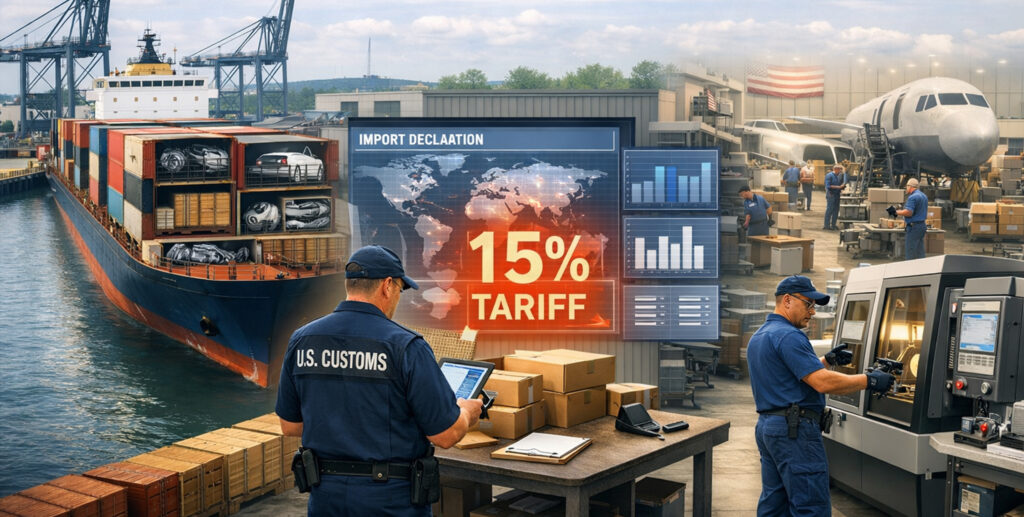
The U.S. has imposed 15% tariffs on a range of Taiwan-origin imports, including auto parts, wood products, and aircraft components, as part of a broader trade enforcement action. The move aims to protect U.S. manufacturers, tighten supply-chain security, and address concerns over transshipment and tariff circumvention.
Why the U.S. Imposed New Tariffs on Taiwan-Origin Goods
The new 15% tariffs are part of a larger U.S. strategy to strengthen domestic manufacturing and close loopholes that allow foreign goods to enter the U.S. market under preferential treatment. According to the reporting, U.S. trade officials have grown increasingly concerned about:
- Transshipment risks — foreign-made goods routed through Taiwan to avoid tariffs
- Supply chain opacity — difficulty verifying true country of origin
- Competitive pressure on U.S. manufacturers in autos, aerospace, and wood products
- National security considerations tied to aircraft and advanced components
While Taiwan remains a key U.S. partner, the administration is signaling that trade enforcement applies universally, even among allies, when domestic industries are at risk.
What Products Are Affected by the 15% Tariff Rate
The tariff action targets several categories of industrial goods where U.S. officials believe tariff circumvention or unfair competition may be occurring. Affected items include:
Auto Parts
- Engine components
- Transmission parts
- Electrical systems
- Aftermarket replacement parts
These categories have seen rising import volumes, raising concerns about origin masking.
Wood Products
- Plywood
- Veneers
- Engineered wood
- Finished wood components
The wood sector has been heavily scrutinized for transshipment through third countries.
Aircraft Parts
- Structural components
- Fasteners
- Subassemblies
- Precision-machined aerospace parts
Given the strategic importance of aerospace, the U.S. is tightening oversight on all imported aircraft-related components.
How These Tariffs Fit into the Broader U.S. Trade Strategy
The new tariffs are not isolated; they align with a broader U.S. manufacturing and trade agenda that includes:
- Strengthening Domestic Production
The U.S. is investing heavily in reshoring, especially in autos, aerospace, and advanced manufacturing. Tariffs help level the playing field for domestic producers.
- Closing Loopholes in Country-of-Origin Rules
Officials are increasingly focused on preventing foreign goods from being routed through low-tariff countries to bypass trade restrictions.
- Enhancing National Security
Aircraft components and advanced auto systems are considered sensitive supply chains. Tariffs help ensure traceability and reduce reliance on uncertain foreign sources.
- Supporting U.S. Workers and Industrial Communities
Manufacturing Dive notes that U.S. labor groups and domestic producers have pushed for stronger enforcement to protect jobs and prevent unfair competition.
What This Means for U.S. Manufacturers and Importers
For U.S. Manufacturers:
- Stronger price competitiveness
- Reduced pressure from low-cost imports
- More predictable supply chains
- Greater incentive for domestic investment
For Importers:
- Higher landed costs
- Need to verify true country of origin
- Potential supply chain restructuring
- Increased compliance requirements
For Consumers:
Short-term price impacts may occur in certain categories, but long-term goals include stronger domestic production and more resilient supply chains.
Key Takeaways
- The U.S. has imposed 15% tariffs on Taiwan-origin auto parts, wood products, and aircraft components.
- The move aims to strengthen domestic manufacturing and prevent tariff circumvention.
- Affected sectors include autos, aerospace, and wood products, all critical to U.S. supply chains.
- The tariffs align with broader U.S. efforts to secure industrial capacity and enforce trade rules.
- Importers will face higher compliance burdens and potential cost increases.
FAQ
Why is the U.S. imposing tariffs on goods from Taiwan?
To address concerns about transshipment, protect domestic industries, and strengthen supply chain security.
Which products are affected by the 15% tariff?
Auto parts, wood products, and aircraft components originating from Taiwan.
Does this mean U.S.–Taiwan relations are weakening?
No, the tariffs are part of broader trade enforcement efforts and do not reflect a shift in diplomatic alignment.
Will these tariffs raise consumer prices?
Some categories may see modest increases, but the long-term goal is to strengthen domestic production and reduce supply chain vulnerabilities.
 Spotify
 Apple Podcasts
 Podbean
 YouTube
 Spotify
 Apple Podcasts
 Podbean
 YouTube