
Summary
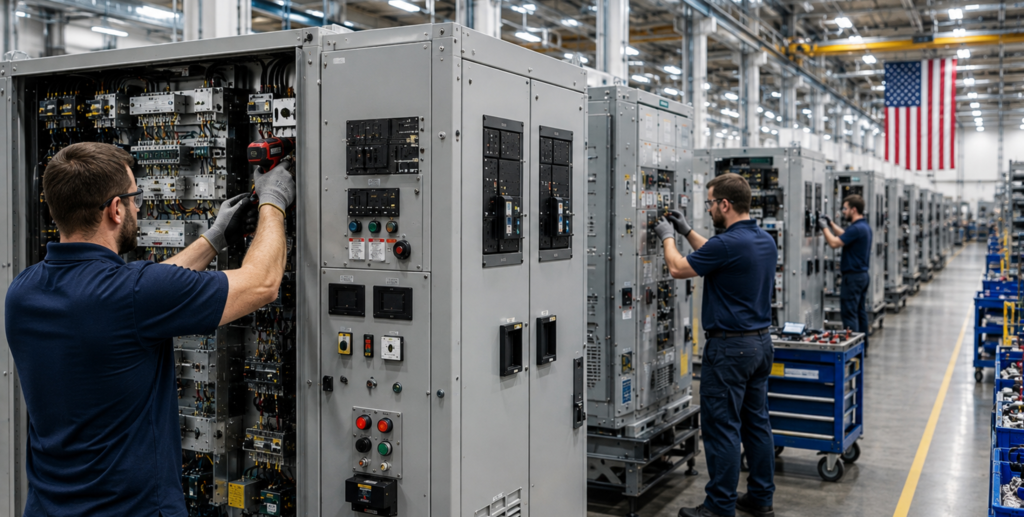
Siemens is making a significant U.S. manufacturing investment to expand production of electrical infrastructure equipment, including circuit breakers, switchgear, and critical grid-modernization technologies. The initiative strengthens domestic supply chains, supports U.S. energy-transition goals, and increases manufacturing capacity across multiple Siemens facilities nationwide.
Why Siemens Is Expanding U.S. Manufacturing Capacity
Siemens reports that demand for modern electrical infrastructure is surging as utilities, manufacturers, data centers, and commercial facilities upgrade aging systems.
Key drivers include:
- Rapid electrification across transportation and industry
- Grid modernization and resilience requirements
- Growth in renewable-energy projects
- Rising demand from semiconductor fabs and EV-battery plants
- Domestic-sourcing requirements tied to federal incentives
Siemens’ investment ensures more electrical equipment is produced in the U.S., reducing lead times and strengthening supply-chain reliability.
What Siemens’ Investment Includes
The company is expanding production across several U.S. facilities, focusing on:
- Circuit breakers and switchgear
- Panelboards and load centers
- Industrial control products
- Grid-modernization and smart-infrastructure technologies
- Components supporting EV charging and electrified transportation
Siemens is also upgrading automation, robotics, and digital manufacturing systems to increase throughput and quality.
How This Investment Supports U.S. Energy and Industrial Growth
Siemens’ expanded U.S. manufacturing footprint directly supports:
Utility Grid Modernization
More domestic production of switchgear and smart-grid components helps utilities strengthen reliability and resilience.
Industrial Electrification
Manufacturers upgrading facilities for automation, robotics, and electrified equipment gain faster access to critical electrical components.
Data Center Expansion
High-capacity electrical infrastructure is essential for hyperscale and AI-driven data centers.
EV and Battery Manufacturing
Siemens equipment supports new EV-battery plants, gigafactories, and charging-infrastructure projects.
Renewable-Energy Deployment
Solar, wind, and storage projects require advanced electrical distribution systems produced domestically.
Strengthening U.S. Supply Chains and Workforce Development
Siemens’ investment will:
- Increase domestic production volume
- Reduce dependence on overseas suppliers
- Shorten delivery timelines for critical electrical equipment
- Support skilled manufacturing jobs across multiple states
- Expand training programs for technicians, engineers, and production specialists
The initiative aligns with federal and state priorities around reshoring and industrial competitiveness.
What This Means for U.S. Manufacturers and Infrastructure Developers
- Faster Access to Critical Electrical Components
Domestic production reduces delays for panelboards, switchgear, and breakers.
- Stronger Supply-Chain Reliability
U.S.-based manufacturing improves resilience during global disruptions.
- Support for Large-Scale Industrial Projects
Semiconductor fabs, EV plants, and logistics hubs benefit from increased capacity.
- Alignment With Federal Incentives
Domestic sourcing supports eligibility for clean-energy and infrastructure funding.
- Long-Term Competitiveness
Siemens’ investment strengthens the U.S. position in advanced electrical manufacturing.
Key Takeaways
- Siemens is making a major U.S. manufacturing investment to expand electrical-infrastructure production.
- The initiative supports grid modernization, industrial electrification, and renewable-energy growth.
- Production increases across circuit breakers, switchgear, panelboards, and smart-grid technologies.
- The investment strengthens domestic supply chains and supports skilled U.S. manufacturing jobs.
- Siemens’ expansion aligns with national priorities around electrification and industrial resilience.
FAQ
Why is Siemens expanding U.S. manufacturing?
To meet rising demand for electrical infrastructure and strengthen domestic supply chains.
What products will be manufactured?
Circuit breakers, switchgear, panelboards, industrial controls, and smart-grid technologies.
Who benefits from this investment?
Utilities, manufacturers, data centers, EV-battery plants, and renewable-energy developers.
Does this support U.S. energy-transition goals?
Yes, Siemens’ expansion accelerates electrification and grid modernization.
 Spotify
 Apple Podcasts
 Podbean
 YouTube