
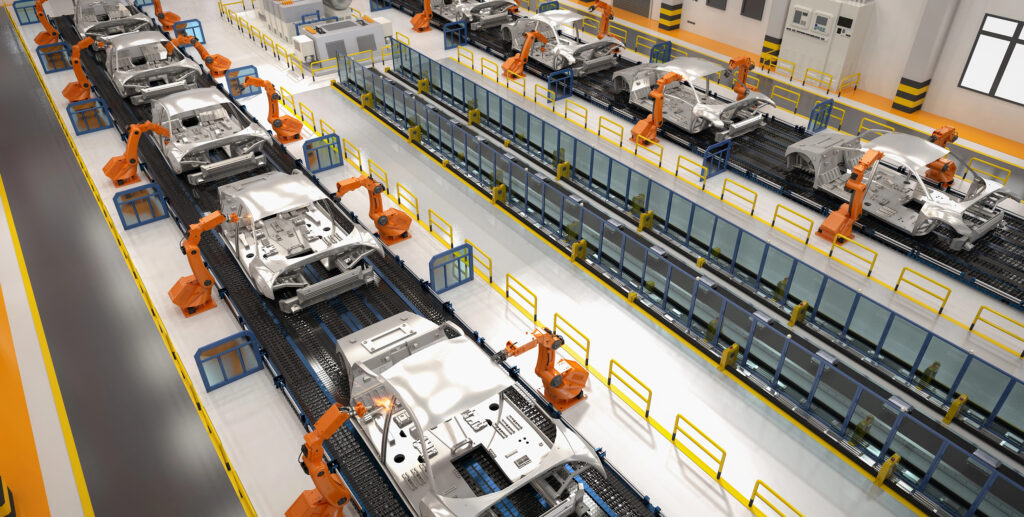
Manufacturing is undergoing one of the most profound transformations since the introduction of the assembly line more than a century ago. This shift, commonly referred to as Industry 4.0, is reshaping how factories operate by integrating digital technologies directly into production systems. Artificial intelligence, robotics, industrial sensors, and cloud computing are converging to create “smart factories” that can monitor themselves, optimize performance, and respond to changing conditions in real time.
The concept of Industry 4.0 originated in Germany over a decade ago as part of a national initiative to modernize manufacturing through digital technology. Today, the idea has spread worldwide as companies recognize that connected manufacturing systems can dramatically improve productivity and competitiveness.
At the core of Industry 4.0 is connectivity. Machines that once operated independently are now linked through industrial networks and the Internet of Things. Sensors embedded in equipment continuously collect data on temperature, vibration, production speed, and quality metrics. This information is transmitted to centralized analytics platforms where algorithms analyze patterns and identify opportunities for improvement.
The impact can be dramatic. According to research from McKinsey & Company, manufacturers that successfully implement smart factory technologies can increase productivity by up to 50 percent while reducing machine downtime by 30 to 50 percent. These gains come from improved visibility into operations, faster decision-making, and the ability to detect problems before they escalate.
One of the most powerful tools enabling this transformation is the digital twin. A digital twin is a virtual model of a physical asset such as a machine, production line, or entire factory. Engineers can simulate how equipment will behave under different conditions and test potential changes before implementing them in the real world.
For example, an automotive manufacturer might use a digital twin to simulate production processes and identify bottlenecks before launching a new vehicle model. Aerospace companies use similar technology to test aircraft components under extreme conditions without physically building multiple prototypes.
Automation is another key component of Industry 4.0. Robots have been used in manufacturing for decades, but modern robotic systems are far more flexible and intelligent than their predecessors. Collaborative robots, often called cobots, are designed to work safely alongside human workers and assist with tasks such as assembly, packaging, and material handling.
Autonomous mobile robots are also becoming common in warehouses and factories. These machines transport materials between production lines, reducing the need for manual forklift operations and improving workplace safety.
The economic potential of Industry 4.0 is enormous. The World Economic Forum estimates that digital manufacturing technologies could add more than $3.7 trillion to the global economy by 2025.
However, implementing smart factory technology is not without challenges. Many manufacturers still rely on legacy equipment that was never designed to connect to digital systems. Upgrading these systems can require significant investment and careful integration planning.
Workforce skills are another hurdle. As factories become more digital, manufacturers need employees who understand data analytics, robotics maintenance, and software integration.
Despite these challenges, adoption is accelerating rapidly. Companies that embrace Industry 4.0 technologies are gaining significant advantages in efficiency, quality, and flexibility.
Manufacturing has always evolved alongside technological progress. Just as mechanization defined the first industrial revolution and electrification drove the second, digital connectivity is now shaping the next era of industrial production.
For manufacturers navigating global competition and supply chain uncertainty, smart factory technologies may ultimately become not just an advantage but a necessity.
 Spotify
 Apple Podcasts
 Podbean
 YouTube
 Spotify
 Apple Podcasts
 Podbean
 YouTube