
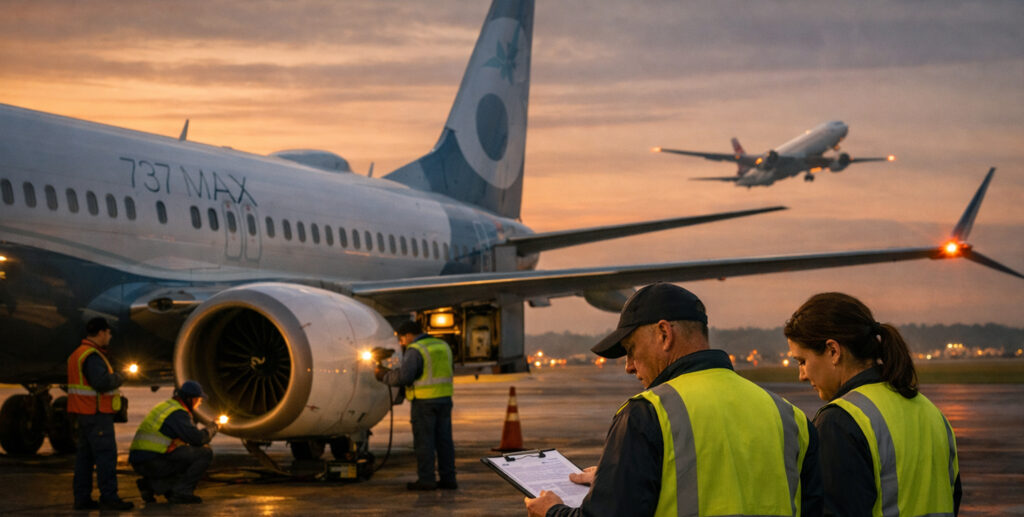
The Federal Aviation Administration has given Boeing something it has not had much of lately: a public vote of confidence. According to the agency, the next group of 737 MAX jets remains on track for approval, a sign that regulators believe Boeing is making progress on the quality and safety issues that have dominated headlines for more than a year. It is a cautious endorsement, but in the world of aviation oversight, even cautious optimism carries weight.
The FAA has been under intense scrutiny since the January incident involving an Alaska Airlines 737 MAX 9, when a door plug panel blew out shortly after takeoff. That event triggered a sweeping review of Boeing’s production system, supplier oversight, and quality-control processes. Since then, the agency has taken a far more hands-on approach, embedding inspectors inside Boeing facilities, slowing production approvals, and requiring the company to meet a long list of corrective actions before any new aircraft can be delivered.
What makes the FAA’s latest statement notable is that it suggests Boeing is finally hitting the milestones regulators expect. FAA officials have said repeatedly that they will not authorize new deliveries until they are satisfied that Boeing’s manufacturing system is stable and compliant. The fact that the next 737 MAX jets are still moving through the approval pipeline indicates that Boeing’s recent changes are having an effect. The company has added new inspection steps, increased supplier audits, and reworked training for employees on the factory floor. It has also slowed production to reduce pressure on workers and ensure that each aircraft receives more thorough checks.
For Boeing, this moment matters. The 737 MAX is the company’s most important commercial program, accounting for most of its order book and long-term revenue. Airlines around the world are waiting for new jets to support growing travel demand, and several carriers have already warned that delayed deliveries are affecting their schedules and fleet plans. A steady return to normal production would help Boeing rebuild trust with customers who have grown frustrated with repeated setbacks.
The FAA’s message also comes at a time when global air travel is expanding again. The International Air Transport Association expects passenger traffic to grow more than 7 percent this year, driven by strong demand in North America, Europe, and Asia. Airlines need new aircraft to meet that demand, and the 737 MAX remains one of the most fuel-efficient narrow-body jets available. Every month of delay has ripple effects across the industry, from route planning to pilot staffing to maintenance scheduling.
None of this means Boeing is in the clear. The FAA has emphasized that oversight will remain strict and that production will not return to previous rates until the agency is fully confident in Boeing’s long-term quality systems. Lawmakers and safety advocates are still pushing for deeper reforms, and the company continues to face investigations and legal pressure. But confirmation that the next jets are on track is a sign that Boeing is moving in the right direction, even if the path forward remains slow and closely monitored.
For an industry built on precision and trust, progress often comes in small steps. This one is meaningful. If Boeing can maintain this trajectory, the company may finally be turning a corner toward stability, reliability, and a more predictable future for the 737 MAX program.
 Spotify
 Apple Podcasts
 Podbean
 YouTube