TRANSCRIPT
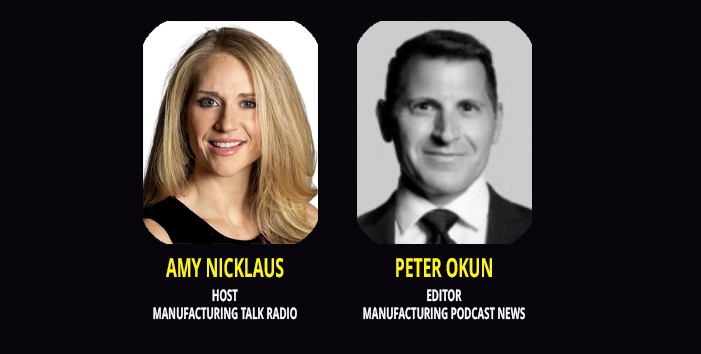
Amy: Hi, and welcome to Manufacturing Talk Radio, and today we are meeting again with Peter Okin, the Editor of Manufacturing Talk, radio’s latest news. In this episode, we are going to explore what the latest PMI numbers are really telling us what global steel trends matter more than really most people think the rising cybersecurity risk facing mid-size manufacturers.
Amy: How tariffs and re regionalization are shaping strategy, what I really means for the workforce and what will define manufacturing competitiveness [00:01:00] over the next three to five years. So let’s start with industry trends and economic indicators. Peter, what does a PMI above 50 really signal? And why does it matter right now?
Peter: Well, first of all, good morning, Amy, and it’s nice to see you again. So, PMI, when people hear that the PMI has moved above 50, the media. Reaction is okay growth. And technically that’s right. Anything above 50 means expansion. But more important, the story is the context. We spent nearly 10 straight months below 50.
Peter: That wasn’t just soft patch, that was sustained contraction. So companies were tightening inventory, delaying capital expenditures, slowing hiring, and watching cash carefully. So when PMI moved back up to around 52.6, the strongest reading we’ve seen since 2022, that is truly meaningful. [00:02:00] It tells us something has shifted.
Peter: New orders are strengthening, um, production is stabilizing. There’s fewer industries that are contracting, and that doesn’t happen at random. What makes this moment especially interesting is the tone. It doesn’t feel overheated, it feels disciplined, so manufacturing. Manufacturers aren’t racing forward.
Peter: They’re testing the ground carefully and honestly, that’s healthy. This feels like a surge and more like a steady pulse returning.
Amy: Okay, so are we looking at like a true recovery here or is this just like a short term bounce? Like how does that, can you give us a little bit more information about that?
Peter: Absolutely. So right now I’d call it early stabilization. So a SANE recovery means multiple months of consistent expansion. It’s improving employment data and renewed capital investment. We are starting to see early signs, particularly because new orders are rising [00:03:00] faster than inventories, which is usually a positive leading indicator.
Peter: But what gives me more confidence than the numbers is the behavior. So leaders aren’t overbuilding. They’re scaling gradually and historically, the recoveries that last are the ones built on discipline, not urgency. So if this continues, we could be at the beginning of a healthier cycle than we’ve seen in years.
Amy: Okay. So how would that exec like affect executive decisions right now,
Peter: So executives don’t celebrate PMI. They translate it into operations. So production schedules move up slightly. Inventory gets rebuilt carefully, but hiring well that’s measured. So instead of broad headcount increases, companies are relying on overtime productivity improvements. and Maybe selective automation, upgrades.
Peter: Employment usually lags the [00:04:00] data by a quarter or two, but leaders want confirmation before they commit to anything, and that restraint tells you something about the mindset and manufacturing. Right now, it’s focused on sustainability and profitable growth.
Amy: So, I mean, with any kind of expansion comes risk, right? So. I guess my, my thought process, my question would pop into my mind is what would be one of the biggest risks during this early expansion phase?
Peter: Good question. So I would say it’s moving too fast. So if companies assume demand will accelerate sharply and they ramp up inventory or labor too aggressively, margins get squeezed if conditions soften. So the manufacturers navigating this best are using better forecasting tools. Real time analytics and closer supplier collaboration.
Peter: This moment is going to reward balance.
Amy: So let’s move on to a little bit about steel production [00:05:00] and supply chains. ’cause this is. All kind of a, I think this all affects, you know, everything you’ve just talked about. But, um, let’s talk a little bit about how the global steel out output matters so much to manufacturers.
Peter: steel is foundational. It touches automotive, construction, heavy equipment, infrastructure, nearly every industrial segment. So China produces more than half of the world’s steel. So when output shifts there because of construction, softness, energy, uh, volatility, environmental constraints, or geopolitical tension, that ripple spreads quickly.
Peter: So even most, even the modest tightening can move prices five, 10, sometimes 15% in a quarter. So for a manufacturing running tight margin. That’s meaningful. So what makes this moment unique is that it’s not purely cynical cyclical, it’s structural [00:06:00] decarbonization pressures, regional realignment and supply chain redesign.
Peter: Steel isn’t just fluctuating, it’s reflecting deeper and industrial re.
Amy: So is there an opportunity here in the US for
Peter: So volatility increases the value of reliability. We’re seeing manufacturers prioritize regional sourcing and longer term contracts. They’re willing to trade slightly higher short-term costs for predictive or predictable supply. That’s a major shift. Reliability becomes a competitive advantage in uncertain markets.
Amy: how should manufacture, uh, manufacturers respond to this?
Peter: So I would say diversify suppliers, reduce geographic concentration risk. Uh, they should negotiate longer term pricing structures where possible and invest in data inventory optimization and predictive planning [00:07:00] tools because they’re helping companies reduce, uh, raw material volatility by double digit percentages.
Peter: So procurement is no longer transactional. It’s a strategic risk management.
Amy: So is globalization fading?
Peter: Uh, I would say no, that it’s more evolving. The future of supply chain blends global reach with regional resilience. So adaptability is the real competitive edge right now. Mm-hmm.
Amy: So one of the things that I, you know, I know that you and I have talked about before, and I did wanna make sure we in incorporate it in today, was, uh, cybersecurity at ransomware. Because we talk about global, we talk about, you know, all of the. Issues that are hitting manufacturers in this space. So can you tell me what are some of the midsize manufacturers?
Amy: What are they being exposed to there?
Peter: So, they’re large enough to be attractive targets, but often not equipped with enterprise, [00:08:00] with enterprise level defenses. So over 60% have faced ransomware attempts. And around 40% have experienced successful breaches. So in manufacturing, downtime isn’t abstract. Um, when systems go down, production stops immediately.
Peter: The urgency creates leverage for attackers. But the real risk isn’t just ransom payments, it’s operational interrupt and interruption. Uh, damaged relationships and shaken confidence. So cybersecurity is now an operational infrastructure.
Amy: What is the long term cost that these manufacturers in endure beyond just like the ransom portion of that?
Peter: trust, um, customers. Remember disruptions, insurance premiums rise. Supply chain partners reassess risks. Reputation in manufacturing is built on reliability, a breach, challenges that, [00:09:00] so cybersecurity has moved from it to the boardroom basically.
Amy: all right, so where do manufacturers start?
Peter: So they need to start with the fundamentals. Uh, multi-facet, multi-factor authentication, tested offline backups, employee training, clear response protocols, basic hygiene, prevents a surprising percentage of attacks, so they need to then build towards segmentation and monitoring.
Amy: I guess this a my only follow up question that is how do they, how does leadership frame like cybersecurity within.
Peter: like safety, it’s not optional. It’s infrastructure, so it protects uptime, revenue and relationships.
Amy: All right, so let’s move on. I mean, I think that’s, you can’t dig in more to that than you, than you already did. Uh, trade policy and regionalization is a really big topic. I mean, we, we hear people asking us about that all the time, [00:10:00] so. Obviously this is a, a good place to start, but what do you think is driving the uncertainty there right now?
Peter: I would definitely say unpredictability so manufacturers can adapt to cost changes. What they struggle the most with is rapid policy shifts. So when tariff structures move unexpectedly, it impacts quoting cycles. Uh, sourcing decisions in capital investment uncertainty slows momentum and confidence accelerates it.
Amy: Yeah. How, how do you think companies are adapting to that right now?
Peter: So regional sourcing, um, redundant supplier networks, greater logistics, visibility. Efficiency still matters, but resilience now carries equal, right and equal weight.
Amy: so obviously it’s pressure right now, we know that. Um, but long term, how do you think this is gonna affect manufacturing?
Peter: [00:11:00] Um, historically, um. It’s gonna strengthen it. I mean, constraint drives modernization. It accelerates automation, reshoring, and supplier diversification and pressure often, pressure often produces stronger systems. So historically, um, this pressure is gonna strengthen US manufacturing long term.
Amy: Okay, great. And what do you think is gonna unlock unlock investment again?
Peter: So definitely clarity. Uh, what executives understand are that the rules of the game won’t shift suddenly, uh, capital flows. So predictability fuels growth.
Amy: So the next thing I wanna talk about is. Something that I think everybody, whether you’re in the workforce or you’re in leadership, um, what does it mean for workforce and how, and how AI is going to be a part of that. Um, so what’s working as far as talent [00:12:00] strategies right now?
Peter: Um, I would definitely say clear growth pathways, so upskilling programs, mentorship, modern tools, a strong culture. Automation is shifting workers towards higher value analytical roles, so that improves engagement. Manufacturing today is data-driven and technology wre, and that story needs to be told more clearly.
Amy: is the skills gap really still real real with everyone that’s as, as versed in technology nowadays?
Peter: It’s very real technical roles remain open in many regions despite competitive wages. Solutions require apprenticeships, education partnerships, and better story tel better storytelling about modern manufacturing careers. Uh, you know, it’s manufacturing is just such a huge, huge thing right now and the skill gap remains and, uh, [00:13:00] there’s a lot going on, uh, with training and providing the necessary education possible so that, um, we can fill the skills gap.
Peter: So it’s, it’s very real.
Amy: I mean, that’s not good, but it’s good to know. I think it’s hopefully good so that we educate this next sector of kids that are coming up and coming out, that there’s opportunity there.
Peter: Absolutely.
Peter: Absolutely.
Amy: How is AI affecting the morale of the workforce? I think there’s probably some fear there, but what do you think?
Amy: What do you think is going on with how that isn’t being implemented? Mm-hmm.
Peter: So I would say in terms of morale, um, I mean it’s there but not when it’s implemented thoroughly. And I’m, and obviously that’s ai. If AI is implemented thoughtfully, then um. [00:14:00] It will hopefully increase morale. So when AI reduces repetitive work and improves processes, morale improves, productivity rises, frustration declines.
Peter: The key is communication and re-skilling. Uh, AI and human connectivity need to work together synergistically.
Amy: Yeah. I mean, hopefully that’s the case.
Peter: Hopefully that’s the case and, and that’s really the goal. I mean, it’s not really to, take over, uh, the whole manufacturing line and everyone, uh, it’s there to make those processes and productivity more efficient. So you still need that human element and the human touch and the human skill behind it in order for AI to work.
Amy: Okay. I mean, I feel like you’re basically. Almost answering my next question here, which would be like, what, what mindset would, would really win out [00:15:00] here?
Peter: So you need to have careful balance. Um, let’s not forget that technology amplifies talent.
Peter: So talent guides technology, so companies investing in both will outperform. So again, they need to invest, invest in the technology and the human resource in order for it to work and outperform.
Amy: All right. So let’s talk a little bit about what you are gonna, what you’re seeing or predicting for over the next three to five years based on, you know, ev everything that you’re learning about. So, what do you think is gonna define competitiveness over the next three to five years?
Peter: I would definitely say adaptability. Uh, regional resilience, digital visibility, workforce flexibility, and sustainable integration. So cost matters, but speed, reliability and transparent transparency matter more. Agility will [00:16:00] separate leaders from the followers. So, um, we need to be careful there.
Amy: So who do you think is gonna lead?
Peter: Organizations that embrace change early, uh, so those who invest in the data infrastructure, those who align to stay sustainability with operational efficiency, and really the future belongs to the adaptable. So, um, those organizations that are getting there, um, earlier than others, those are the ones that are gonna end up leading.
Amy: So sustainability is a, a word that I hear. Like constantly it’s, it’s used and thrown around. What does the role of sustainability truly play within manufacturing?
Peter: So it’s really strategic, so energy efficiency reduces cost. Waste reduction, improves margins and process optimiz process optimization drives performance. I would say [00:17:00] that sustainability isn’t separate from growth. It’s increasing. It’s increasingly part of it.
Amy: What, what do you think is the biggest takeaway from all of these signals that, that we’re talking about today?
Peter: Uh, I would definitely say manufacturing isn’t just recovering, it’s recalibrating. I mean, it’s, it’s an exciting time right now.
Amy: That’s a very, it’s a very technological word
Peter: It is. It
Amy: we’re recalibrating. That really brings it all back around.
Peter: It really does. And um, it’s definitely more disciplined. It’s more digital, it’s more resilient, and the companies that lean into that evolution instead of resisting it will define the next industrial cycle.
Amy: Okay, great. Awesome. Well, Peter, thank you so much again for doing this. If you want to learn more about the latest manufacturing news, uh, go to our website, manufacturing talk radio.com. Uh. We [00:18:00] have, Peter has great articles up constantly with really what’s really happening within manufacturing. Uh, again, that’s manufacturing talk radio.com, mfg talk radio.com, or you can go and check out our podcast and keep subscribe.
Peter: Thank you Amy. I, I, I truly appreciate it. All
 Spotify
 Apple Podcasts
 Podbean
 YouTube
 Spotify
 Apple Podcasts
 Podbean
 YouTube