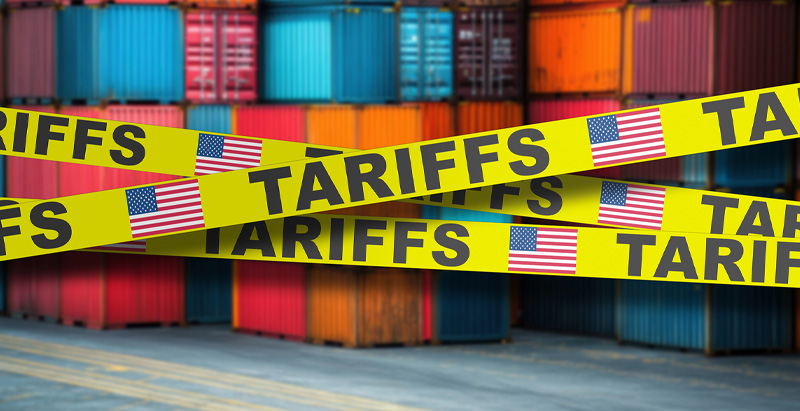
If you grew up hearing stories about bustling factory floors packed with workers in places like Michigan, Ohio, and Indiana, you might think America’s manufacturing heartland could be reborn simply by slapping tariffs on imports. But here’s the urgent truth: tariffs aren’t the magic fix many politicians promise, and they may be hurting the very workers and regions they’re supposed to save.
When then–candidate Donald Trump vowed to “bring manufacturing jobs back” to Michigan, it struck a chord across the Midwest. Upon his return to the White House, he declared the U.S. trade deficit a “national emergency” and unleashed a sweeping set of tariffs aimed at foreign goods. The goal? Make imports more expensive, encourage companies to build at home, and revive the industrial might that once defined the region.
But the numbers tell a different story. After new tariffs hit in April 2025, U.S. manufacturing shed roughly 8,000 jobs in December alone, and payrolls were down by about 72,000 between April and the year’s end. Even Michigan, one of the most manufacturing-dependent states, saw a net loss of 2,500 jobs in that period.
That might seem counterintuitive. How could a protectionist trade policy reduce manufacturing jobs? The answer lies in how factories work today. The Midwest isn’t your grandfather’s factory anymore. U.S. manufacturers are among the most productive in the world, contributing about 15.9 % of global output, more than Japan, Germany, and South Korea combined. But productivity has changed what “manufacturing” looks like. Many jobs today require high technical skill, and manufacturing creates value not just through labor numbers but through advanced machinery, engineering, and integration into global supply chains.
The Brookings analysis shows that tariffs can do real damage because they don’t just tax foreign finished products; they tax the raw materials and components U.S. companies use. When steel, aluminum, chemicals, or electronic parts get hit with higher tariffs, that raises production costs for automakers, machinery makers, and other advanced manufacturers across the Midwest. Those higher costs make U.S. goods less competitive at home and abroad, slowing growth and discouraging investment.
A Federal Reserve study from 2019 found that the 2018 tariffs on steel and aluminum, far narrower in scope than today’s reduced total U.S. manufacturing employment relative to what it would have been without tariffs, because downstream industries faced higher input costs.
And it’s not just one report. Analysts warn that the average American household is paying more because of tariffs, in some estimates adding roughly $1,100 in “tariff tax” per year. Higher production costs also squeeze manufacturers’ slim margins, often forcing them to absorb costs or pass them on to consumers, all while failing to spur the kind of onshoring boosters promise.
Economists outside Brookings reach similar conclusions. A Wells Fargo report cautioned that tariffs alone are unlikely to bring jobs back to the Midwest because high U.S. labor costs, demographic trends, and skills shortages mean domestic production won’t rebound simply due to price changes.
Even broader data suggest that proposed tariff policies could push the U.S. average effective tariff rate much higher, from around 2.2 % to over 17 %, disproportionately hitting states with dense manufacturing workforces, like Ohio and Indiana. That could disrupt supply chains and increase consumer prices more than spark big hiring gains.
So, if tariffs aren’t the answer, what is? Many experts argue that support for workforce training, investment in advanced manufacturing technologies, and policies that improve competitiveness without distorting supply chains could do far more to revitalize Midwest economies. Unlike tariffs, these strategies build on what today’s factories need: skilled workers, innovation, and integration into global markets.
In short, nostalgia for the factory jobs of the past shouldn’t blind policymakers to the realities of the modern global economy. Tariffs might sound good on a campaign trail, but the data and expert analysis suggest they won’t bring back the golden age of Midwest manufacturing and could slow the sector’s future growth instead.
 Spotify
 Apple Podcasts
 Podbean
 YouTube