
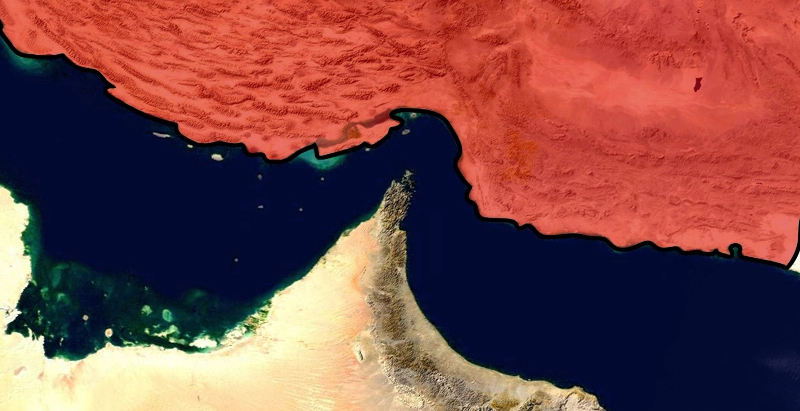
If you want to understand why manufacturers are suddenly bracing for price increases, you must start with a place most people rarely think about, the Strait of Hormuz. It’s only about 21 miles wide at its narrowest point, yet it carries roughly 20% of the world’s oil supply along with a significant share of natural gas and petrochemicals. When something disrupts that flow, the effects don’t stay regional; they ripple across the entire global economy.
That’s exactly what’s happening right now.
Over the past few weeks, escalating tensions and shipping disruptions in the region have sent oil markets surging. Prices have jumped by roughly 50%+ in a short period, with crude pushing past $115 per barrel and climbing. That kind of spike doesn’t just affect gas prices; it hits manufacturing at its core.
Because oil isn’t just fuel. It’s embedded in nearly everything manufacturers rely on. It powers transportation, fuels production facilities, and serves as a key ingredient in petrochemicals, the building blocks of plastics, packaging, synthetic materials, and more. So when oil rises, it doesn’t move one cost, it moves all of them at once. Even a $10 per barrel increase can raise plastic production costs, which then works its way into packaging, components, and finished goods.
And that’s exactly what we’re seeing unfold.
As supply tightens, materials are reacting quickly. The Middle East accounts for more than 40% of global polyethylene exports, so disruptions there immediately constrain global supply. Plastics and resins are already hitting multi-year highs. PVC prices have jumped around 20% in some regions, and fertilizer costs have surged between 30%–40%, adding pressure not just to manufacturing, but to agriculture and food production as well.
This is where the situation becomes more than just an energy story—it becomes a supply chain story.
Manufacturers are now being squeezed from multiple directions at the same time. Energy costs are rising, making production more expensive. Transportation costs are climbing as fuel prices increase. And raw material costs are surging due to supply disruptions. It’s not a single issue to solve—it’s a layered challenge happening all at once.
In some parts of the world, especially across Asia, the impact is even more immediate. Many countries rely heavily on Middle Eastern energy and petrochemical imports, and as those supplies tighten, production slowdowns are already starting to occur. At the same time, global shipping costs and insurance premiums are increasing, adding yet another layer of expense to already strained supply chains.
What makes this moment especially significant is the scale of the disruption. Analysts are warning that as much as 12 million barrels per day of oil supply could be affected. To put that into perspective, global demand sits just over 100 million barrels per day. That kind of imbalance isn’t minor—it’s structural. And when supply and demand fall out of balance at that level, volatility becomes unavoidable.
That’s why projections are becoming more aggressive. Some forecasts suggest oil could climb to $132 per barrel or higher if disruptions persist. And at those levels, the impact doesn’t stay within manufacturing—it spreads across the entire economy.
Because oil touches everything.
It affects how goods are shipped, how products are packaged, how food is grown, and how materials are produced. Roughly one-third of global fertilizer trade moves through the Strait of Hormuz, meaning disruptions there can directly influence global food prices. And as those costs rise, they eventually reach consumers through higher prices at the store, increased transportation costs, and broader inflationary pressure.
For manufacturers, this creates a very real and immediate challenge.
Do you absorb the rising costs and protect your customers? Or do you pass them along and risk losing business?
Large organizations may have some flexibility, but for many small and mid-sized manufacturers, margins are already tight. Sustained increases in energy, materials, and logistics can quickly erode profitability. Some companies are trying to get ahead of it—locking in supplier contracts, diversifying sourcing, or exploring alternative materials—but those strategies take time to implement.
In the short term, most are simply bracing for impact.
And everything now comes down to one question: how long does this last?
If the disruption is resolved quickly, markets may stabilize, and some of the pressure could ease. But if tensions continue, this could signal a longer-term shift that forces manufacturers to rethink supply chains, sourcing strategies, and even pricing models. There’s already growing discussion about reducing reliance on this critical chokepoint altogether, but those changes won’t happen overnight.
What this moment really highlights is just how interconnected and fragile the global manufacturing ecosystem has become.
A disruption in a single waterway just 21 miles wide can drive double-digit increases in materials, squeeze margins across industries, and push costs all the way down to consumers.
For manufacturers, this isn’t just another market fluctuation.
It’s a real-time stress test and one that’s still unfolding.
 Spotify
 Apple Podcasts
 Podbean
 YouTube