
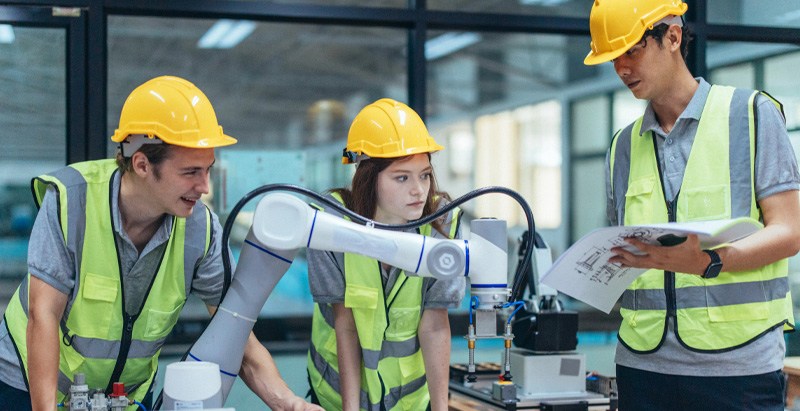
When most of us think about mentors, we picture a trusted advisor helping a young person find their path. In New Hanover County, North Carolina, students are getting exactly that, but with a twist: they’re being mentored right into a real manufacturing career. That’s important. The U.S. manufacturing sector is projected to need more than 2 million skilled workers by 2030 just to meet demand, and mentorship is emerging as one of the most practical ways to address that shortfall.
At the center of this effort is Jon Barber, general manager of Wilmington Grill and chair of the Career and Technical Education (CTE) business advisory council for New Hanover County Schools. Barber didn’t stumble into manufacturing; he grew up on factory floors watching his father manage. But he knows that not every middle or high school student gets that kind of exposure. That’s why he’s opening his doors literally to young people.
“I walk students through real projects from concept to production,” Barber says. For one, Ashley High School sophomore, that meant designing a multifunctional table for her dad. Barber didn’t just talk her through it — he put her drawings into production and brought her into the plant to see the metal cut, bent, welded, and assembled.
What Mentors Bring to the Shop Floor and the Classroom
Barber’s involvement goes well beyond one student. Wilmington Grill, a family-owned business with more than a dozen employees, participates in middle school manufacturing camps, makes classroom presentations, and invites students to tour the plant. Whether through the Greater Wilmington Chamber of Commerce’s Career and Leadership Development Academy or an ad hoc visit, Barber’s goal is to make manufacturing less mysterious.
Mandy Mills, CTE director for the district, calls Barber’s work “a model of impactful, community-centered partnership.” She notes that these experiences help students see themselves as future professionals, not just future workers. Barber’s efforts are supported by educators like Laura Brogdon-Primavera and community college leaders such as Erin Easton, who together form what Barber humorously calls the “big three” driving technical education.
Why These Early Experiences Matter
Barber and Mills emphasize that hands-on exposure like this doesn’t just inspire students, it builds skills that schools alone can’t always teach. In the district’s CTE programs, students can earn industry-recognized credentials in areas like OSHA safety certification, SOLIDWORKS design, and Certified Production Technician credentials, all while still in high school. These credentials make the transition into community colleges or entry-level jobs much smoother.
Nationwide, research shows mentorship and work-based learning can play a significant role in career success. For example, one Department of Education-linked study found that students who met regularly with advisors in their first year of college had a 170 % higher chance of completing their degree, a testament to how guidance can make a difference.
Manufacturing Needs Mentors and Students
Manufacturers across the U.S. are responding to workforce shortages by creating formal mentorship and training programs. In Minnesota, Fastenal’s Manufacturing Sponsorship Program pairs students with full-time machining work while they earn college credits; the company reports an 80 % retention rate from these sponsored students.
Experts say mentorship bridges the so-called “skills gap,” the disconnect between what schools teach and what employers need. Building a solid workforce is more than training on machines; it’s about connecting students to real people who can show them what a career is really like.
Barber sums it up this way: “Not every student knows what manufacturing is, but once they see it, learn from it and feel welcome in it, you can change futures.”
 Spotify
 Apple Podcasts
 Podbean
 YouTube