
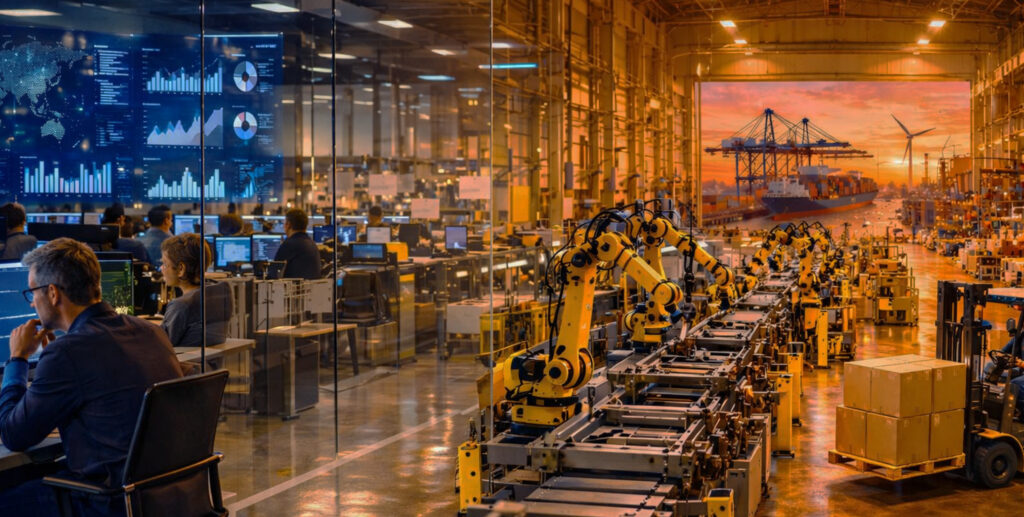
A quiet shift is happening in the world of venture capital, and it is reshaping how money flows into manufacturing, supply chains, energy, logistics, and other real-world industries. Eclipse, one of the few major firms that has built its identity around physical-industry innovation, has closed a massive $1 billion fund aimed squarely at companies that build things, move things, and power things. In a tech landscape that has spent years obsessed with software, this is a strong signal that investors are rediscovering the value of the physical economy.
What makes this fund especially notable is who is backing it. University endowments, pension funds, and institutional investors are putting serious capital behind the idea that the next decade of innovation will not be dominated by social apps or consumer platforms. Instead, it will come from robotics, advanced manufacturing, automation, industrial AI, clean energy systems, and the infrastructure that keeps the global economy running. These investors are betting that the biggest opportunities are in sectors that have been underfunded for years.
Eclipse has been vocal about the gap between digital innovation and physical-world modernization. While software has transformed finance, media, and retail, industries like manufacturing and logistics have often been left behind. Many factories still run outdated equipment. Supply chains rely on manual processes. Energy systems need modernization. The firm argues that solving these problems requires a different kind of venture capital, one that understands hardware cycles, regulatory environments, and the complexity of scaling physical products.
The timing could not be better. The United States is in the middle of a manufacturing revival driven by reshoring, federal incentives, and a renewed focus on supply chain resilience. Billions of dollars are flowing into semiconductor plants, battery factories, electric vehicle infrastructure, and clean energy projects. Companies need automation, robotics, and advanced production systems to meet demand. Venture-backed startups are stepping in to fill those gaps, and Eclipse wants to accelerate that momentum.
This new fund also reflects a broader shift in how investors think about risk. For years, hardware and industrial startups were considered too slow, too expensive, and too complex. But the success of companies in robotics, warehouse automation, industrial AI, and climate tech has changed that perception. These businesses may take longer to build, but they often create defensible technology, long-term customer relationships, and real economic impact. In a world where software valuations have become unpredictable, physical-industry innovation looks increasingly attractive.
Eclipse says it will use the new capital to support companies from early development through large-scale commercialization. That means helping startups navigate supply chains, manufacturing partnerships, regulatory approvals, and the challenges of building physical products at scale. It also means backing founders who understand both engineering and operations, people who can design a system and figure out how to produce it efficiently.
The most interesting part of this story is what it says about the future of American industry. For decades, the physical economy was treated as old-school and unglamorous. Now it is becoming one of the most important frontiers for innovation. Investors are realizing that the next generation of breakthroughs will not just live on screens. They will live in factories, warehouses, power grids, and transportation networks. Eclipse’s new $1 billion fund is a sign that capital is finally catching up to that reality.
 Spotify
 Apple Podcasts
 Podbean
 YouTube