
Summary
China’s tightening control over rare earth mining, refining, and export policies is accelerating a U.S. manufacturing shift toward domestic critical-minerals production. As China restricts technology transfers and strengthens export rules, U.S. companies are investing in new mines, processing facilities, and magnet plants to secure supplies essential for EVs, defense systems, semiconductors, and clean-energy manufacturing.
Why China’s Rare Earth Dominance Is Reshaping U.S. Manufacturing Strategy
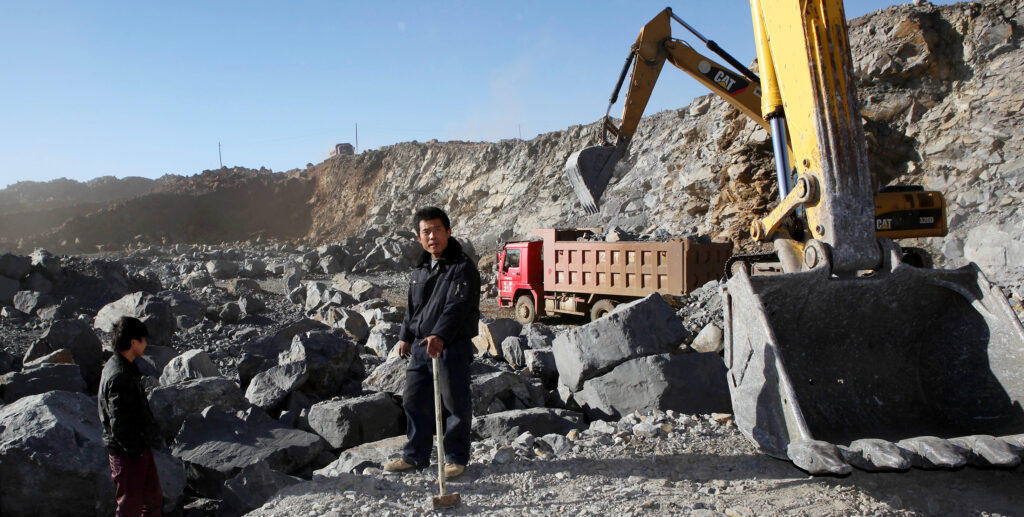
China controls the majority of global rare earth refining and magnet production materials essential for motors, turbines, sensors, chips, and advanced defense systems. OilPrice reports that China has tightened export controls, restricted technology transfers, and strengthened oversight of rare earth processing.
These moves have created supply-chain risk for U.S. manufacturers, prompting federal agencies and private companies to accelerate domestic investment. Rare earths are foundational to modern manufacturing, and any disruption can stall production across aerospace, automotive, electronics, and energy sectors.
How China’s Export Controls Are Affecting Global Supply Chains
China’s strategy includes:
- Stricter export licensing
- Limits on rare earth separation and magnet-making technology
- Consolidation of state-owned mining and refining operations
- Increased geopolitical use of mineral supply chains
These actions make it harder for foreign companies to access refined materials and advanced magnet technologies. Manufacturers relying on Chinese supply chains face longer lead times, higher costs, and greater uncertainty.
The result: a global push to diversify away from China and rebuild domestic or allied-nation supply.
The U.S. Response: New Mines, Processing Plants, and Magnet Facilities
U.S. companies supported by federal incentives are rapidly expanding domestic critical-minerals capacity. OilPrice highlights several major initiatives:
Rare Earth Mining & Separation
New projects in states like California, Texas, and Wyoming aim to increase domestic mining and refining of neodymium, praseodymium, dysprosium, and terbium.
Magnet Manufacturing
Multiple U.S. firms are building permanent-magnet plants to supply EV motors, wind turbines, robotics, and defense systems.
Allied-Nation Partnerships
The U.S. is collaborating with Australia, Canada, and European partners to create non-Chinese supply chains for rare earths and advanced materials.
These investments aim to create a vertically integrated supply chain from ore to finished magnet inside the United States.
Why Rare Earths Matter for EVs, Defense, and Clean Energy
Rare earth magnets are essential for:
- EV motors
- Wind-turbine generators
- Semiconductor equipment
- Missile guidance systems
- Aircraft actuators
- Robotics and automation
Without reliable access to rare earths, U.S. manufacturers face production delays, higher costs, and reduced competitiveness. China’s strategy has made mineral security a national-level priority.
What This Means for U.S. Manufacturing Competitiveness
- Domestic Supply Chains Are Becoming a Strategic Imperative
Manufacturers are shifting sourcing away from China to reduce geopolitical risk.
- New Industrial Investment Is Accelerating
Mining, refining, and magnet-making projects are expanding across the U.S.
- National Security Is Driving Policy
Defense systems rely heavily on rare earth magnets, making supply stability essential.
- EV and Clean-Energy Growth Depends on Mineral Independence
Battery and motor production require stable access to critical minerals.
- Long-Term Competitiveness Requires Full Vertical Integration
The U.S. is working to rebuild every stage of the rare earth supply chain from extraction to finished components.
Key Takeaways
- China’s rare earth strategy is pushing the U.S. to rebuild domestic mineral supply chains.
- Export controls and technology restrictions are increasing global supply-chain risk.
- U.S. companies are investing in new mines, refineries, and magnet plants.
- Rare earths are essential for EVs, defense systems, semiconductors, and clean energy.
- Mineral independence is becoming a core requirement for U.S. manufacturing competitiveness.
FAQ
Why is China’s rare earth strategy important?
China controls most global refining and magnet production, creating supply-chain risk for manufacturers.
How is the U.S. responding?
By investing in domestic mining, refining, and magnet-making facilities.
Which industries rely on rare earths?
EVs, aerospace, defense, semiconductors, robotics, and clean-energy manufacturing.
Will the U.S. achieve mineral independence?
Progress is accelerating, but full independence requires long-term investment and supply-chain integration.
 Spotify
 Apple Podcasts
 Podbean
 YouTube