
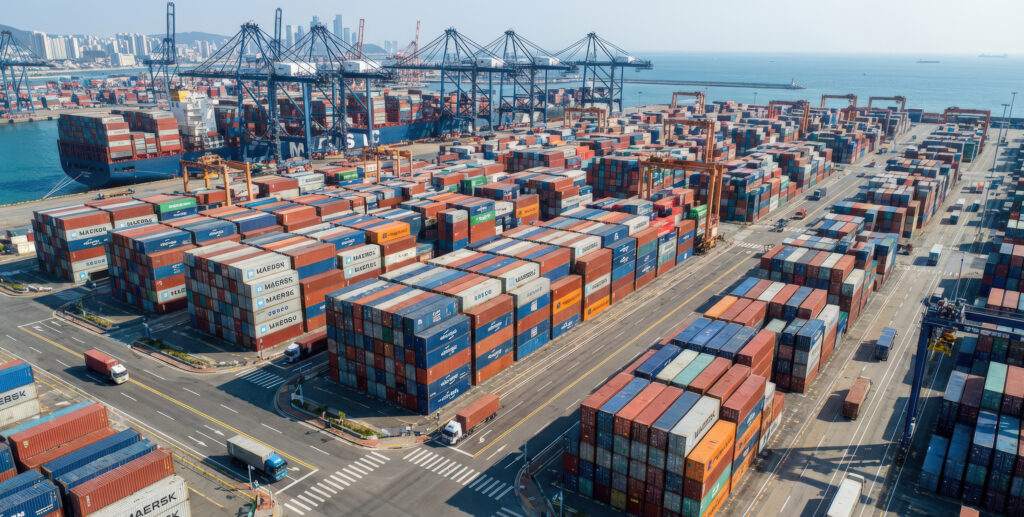
Over the past several years, manufacturers around the world have learned a difficult lesson about global supply chains: efficiency alone is not enough. For decades, many companies built supply networks designed primarily to minimize costs. Components were sourced from the lowest-cost suppliers, often located thousands of miles away from final assembly facilities. While this approach helped reduce production expenses and increase profit margins, it also created long, complex supply chains that proved highly vulnerable when disruptions occurred.
Recent global events have exposed these vulnerabilities in dramatic ways. The COVID-19 pandemic brought large portions of the global economy to a halt. Lockdowns temporarily shut down factories across Asia, Europe, and North America, while shipping bottlenecks slowed the movement of goods worldwide. At one point during the pandemic, more than 90 percent of global container shipping experienced delays, according to logistics research firm Sea-Intelligence. The ripple effects were felt across industries, from automotive manufacturing to consumer electronics.
Automakers were among the hardest hit. A shortage of semiconductor chips forced many automotive companies to slow or halt vehicle production. Industry estimates suggest the semiconductor shortage alone reduced global vehicle production by roughly 10 million units in 2021, costing automakers billions of dollars in lost revenue.
These disruptions revealed how dependent many manufacturers had become on global supply networks optimized primarily for cost efficiency rather than resilience. When a single supplier or transportation hub failed, entire production systems could grind to a halt.
As a result, manufacturers are now rethinking traditional supply chain strategies and placing a greater emphasis on resilience, flexibility, and transparency.
One of the most significant shifts is supplier diversification. Instead of relying on a single supplier for critical components, companies are building relationships with multiple suppliers across different regions. This approach reduces the risk that a disruption in one location will halt production entirely.
For example, many electronics and automotive manufacturers are now sourcing semiconductor components from several suppliers instead of relying heavily on a single region. Governments are also encouraging this diversification. In the United States, the CHIPS and Science Act includes billions of dollars in funding aimed at expanding domestic semiconductor manufacturing capacity.
Another trend gaining momentum is nearshoring or relocating production closer to major consumer markets. Companies that previously sourced components from distant suppliers are exploring alternatives in neighboring regions or domestic markets.
Nearshoring offers several advantages. Shorter supply chains reduce transportation times and shipping costs while also improving visibility into supplier operations. Manufacturers can respond more quickly to demand fluctuations or disruptions because production facilities are located closer to final assembly plants and customers.
In North America, nearshoring has driven increased manufacturing investment in Mexico and the southern United States. Similarly, European companies are exploring regional supply networks to reduce dependence on distant suppliers.
According to supply chain analysts at McKinsey & Company, companies that diversify supply networks and adopt nearshoring strategies can reduce supply chain disruptions by 30 to 50 percent while improving overall resilience.
Technology is also playing a crucial role in transforming supply chain management. Advanced digital platforms now allow manufacturers to monitor supply chain activity in real time. These systems track shipments, inventory levels, and supplier performance across complex global networks.
Artificial intelligence and predictive analytics are becoming especially valuable tools. AI systems analyze large datasets that include weather patterns, geopolitical developments, shipping congestion, and supplier performance metrics. By identifying patterns and potential risks, these systems can alert manufacturers to potential disruptions before they escalate into major problems.
For example, predictive analytics platforms can analyze port congestion data and shipping schedules to anticipate delays. If a shipment appears likely to be delayed, logistics teams can reroute cargo through alternative ports or adjust production schedules accordingly.
Supply chain visibility has become one of the most important priorities for manufacturers. In the past, many companies had limited insight into the operations of second- or third-tier suppliers. Today, digital tracking systems allow manufacturers to map supply networks in much greater detail.
This visibility helps companies identify potential bottlenecks and assess risks more effectively. Some organizations are even using digital twin technology to simulate supply chain operations and test how disruptions might affect production.
Blockchain technology is also being explored as a way to improve supply chain transparency. Blockchain platforms create secure digital records of transactions that can track products as they move through supply chains. This capability is particularly valuable for industries where traceability is critical, such as pharmaceuticals, food production, and aerospace manufacturing.
Despite these advances, supply chain management remains an ongoing challenge. Global logistics networks continue to face pressure from geopolitical tensions, trade policy shifts, and transportation capacity constraints.
Rising freight costs have also added complexity. Container shipping rates increased dramatically during the pandemic and remain volatile in many regions. Manufacturers must balance cost considerations with the need for reliable transportation networks.
Labor shortages represent another concern. Logistics companies, trucking fleets, and warehouse operators have struggled to recruit workers, slowing the movement of goods across supply chains.
In response, manufacturers are investing in automation technologies within distribution centers and warehouses. Autonomous mobile robots and automated sorting systems are helping logistics companies move goods more efficiently while reducing dependence on manual labor.
Industry analysts believe these changes represent a fundamental shift in supply chain strategy. Rather than focusing solely on minimizing costs, manufacturers are now building supply networks designed to withstand uncertainty.
According to Gartner, nearly 80 percent of large manufacturing companies are expected to invest heavily in digital supply chain technologies by 2027 as part of broader resilience strategies.
Supply chains are also becoming more collaborative. Manufacturers are working more closely with suppliers, logistics providers, and technology companies to share data and coordinate operations. This collaboration allows organizations to identify potential disruptions earlier and respond more effectively.
The lessons learned over the past several years are reshaping how manufacturers approach supply chain management. Global supply networks will remain essential for international trade, but companies are now prioritizing flexibility, transparency, and redundancy.
The supply chains of the future will not simply be optimized for efficiency. They will be designed to adapt quickly to changing conditions, withstand unexpected disruptions, and support consistent production in an increasingly unpredictable global economy.
For manufacturers navigating a world of geopolitical shifts, transportation challenges, and evolving consumer demand, resilient supply chains may prove to be one of the most important competitive advantages of the coming decade.
 Spotify
 Apple Podcasts
 Podbean
 YouTube
 Spotify
 Apple Podcasts
 Podbean
 YouTube