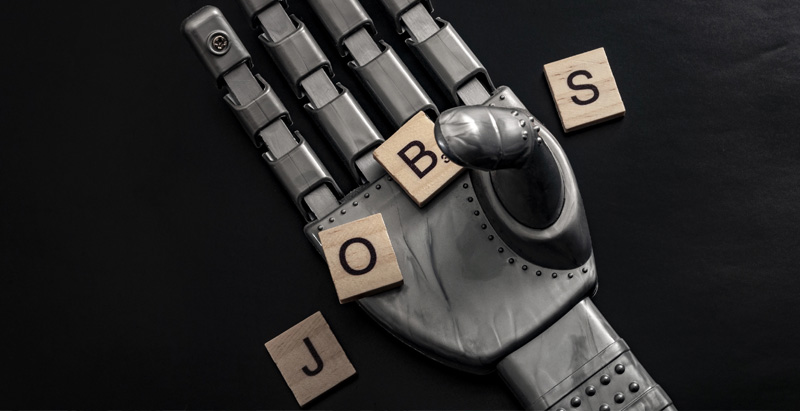
The story in U.S. manufacturing isn’t just about robots taking over factories; it’s more complicated, and that’s exactly what recent data and expert voices are showing. Over the past year, U.S. manufacturing payrolls shrank by about 78,000 jobs, including roughly 12,000 cuts in just August, according to the latest federal employment figures. That puts total factory jobs near their lowest level since early in the pandemic.
So, what’s driving this shift? It’s easy to point at automation and artificial intelligence, but those technologies are only part of a broader economic and labor picture.
Automation and AI: Real Impacts, Real Limits
There’s no question that automation from robotic arms on production lines to AI-driven quality control systems has changed how factories operate. Companies facing persistent labor shortages are turning to machines to keep production running. Some sectors, like automotive, semiconductors, and electronics, are moving especially fast.
That said, robots and AI don’t simply “steal jobs” in a neat one-to-one switch. A survey from National University suggests that since 2000, automation has contributed to the loss of roughly 1.7 million U.S. manufacturing jobs, and about 40% of employers expect to reduce staff where automation can handle tasks.
But academic research complicates the narrative even further. Some MIT work shows automation can augment workers rather than replace them outright, boosting productivity and shifting what people do rather than eliminating them. Other research from the Federal Reserve Bank of St. Louis highlights that robots might reduce jobs in certain contexts but can also create demand for other kinds of roles, especially those requiring technical skill.
In manufacturing specifically, experts note that automation tends to affect routine, repetitive tasks most strongly, the things machines are already excellent at. Jobs involving creativity, problem-solving, and machine maintenance remain much harder to automate.
Jobs Are Changing — Not Just Disappearing
Industry voices see automation as a catalyst for transformation more than a pure job killer. Janelle Bieler, head of tech talent solutions at Akkodis, told Manufacturing Dive that factories are becoming “smarter and more automated,” but “people will not disappear from the equation.” Roles are shifting from basic assembly to technician, robotics maintenance, and data monitoring positions.
That fits broader labor market research showing that AI and automation change the content of work. Instead of eliminating all jobs, they tend to replace some tasks while creating new ones, sometimes requiring new skills. McKinsey research has found this pattern repeatedly across technologies: while certain tasks become obsolete, other opportunities emerge that didn’t exist before.
On the ground, these changes can feel uneven. Small and mid-sized manufacturers that can’t afford expensive automation often still rely on traditional labor, while larger firms race ahead with new technology. That means the pace of job change varies widely across regions and company sizes.
Other Forces at Work Beyond AI
AI and automation aren’t the only factors in manufacturing’s employment decline. Experts point out a handful of other big influences:
- Tariff policy and economic uncertainty. Shifts in trade policy have made some companies wary of long-term investment and hiring, which contributes to slower labor growth.
- Immigration rules. Tighter visa policies have made it harder for manufacturers to fill roles that previously relied on foreign labor, pushing some toward automation faster than they might otherwise.
- An aging workforce. Like many parts of the U.S. economy, manufacturing is grappling with older workers retiring faster than new entrants are coming in.
What It Means for Workers
The impact on workers isn’t straightforward. Those in routine jobs are more vulnerable to being replaced by automated systems. But those with technical, analytical, or machine-maintenance skills are increasingly in demand. The Brookings Institution and other analysts emphasize that AI doesn’t impact all occupations evenly; instead, it reshapes the type of work people do.
That underscores a key point most economists agree on: reskilling and training matter. To thrive in an AI-influenced manufacturing sector, workers often need new skills, whether it’s robotics maintenance, programming, or data interpretation.
The Bigger Picture
Declining manufacturing jobs reflect long-term trends stretching back decades, not just the arrival of AI. Factory employment has been shrinking since the late 20th century as productivity increased and globalization reshaped supply chains. Automation accelerates some of that change, but it isn’t the only story.
At the same time, AI doesn’t necessarily spell doom for jobs overall. Firms and policymakers that invest in education, training, and worker transition programs may help turn technological shifts into opportunities.
In other words, the future isn’t just about machines replacing humans. It’s about how people adapt through learning new skills, moving into emerging roles, and reshaping their work alongside evolving technology. And while that transition won’t be easy for everyone, history shows that innovation tends to create new kinds of jobs even as it disrupts old ones.
 Spotify
 Apple Podcasts
 Podbean
 YouTube