
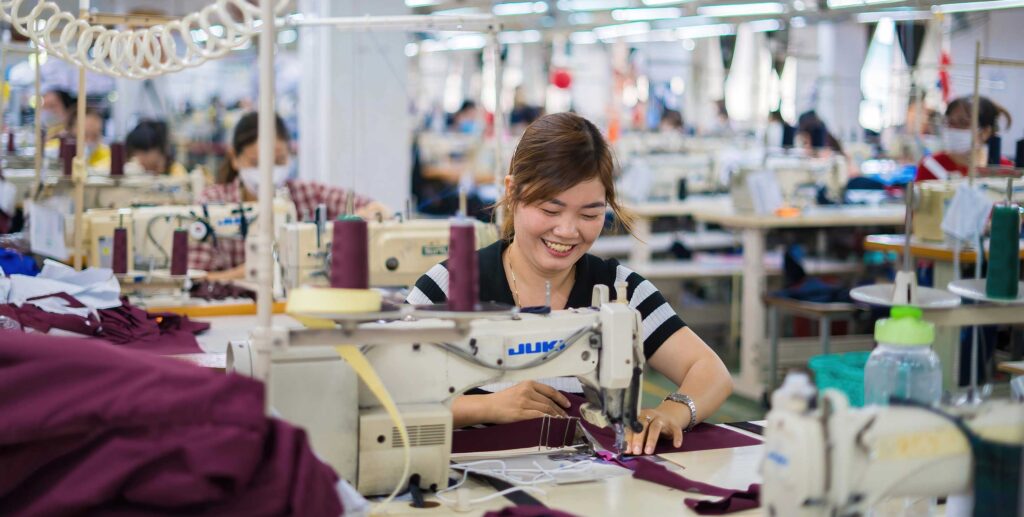
Vietnam is no longer just a place you hear about in travel stories. It’s become one of the world’s biggest manufacturing hubs, and that’s largely because companies are trying to get around steep U.S. tariffs on Chinese-made goods.
Take Bac Ninh province, a once-quiet agricultural area just north of Hanoi. In the early 2000s, it was known for rice paddies and traditional folk music. Now it’s dotted with massive factory parks and cranes at construction sites, proof of a rapid transformation into a global manufacturing center.
Tariffs Are Driving the Shift
The reason for this boom is trade policy. Over the past several years, the U.S. has slapped heavy tariffs on Chinese imports in some cases as high as 47% under recent trade agreements. To soften tensions, the U.S. and Vietnam struck a deal that puts a 20% tariff on most Vietnamese imports and even a 40% tariff on goods seen as “transshipped” from China.
Economists say even a 20% tariff can be preferable to the uncertainty and expense of much higher duties on Chinese products. Vietnam becomes a middle ground: companies can assemble goods there and still sell into the U.S., so long as the final product qualifies as Vietnamese origin.
As Jacob Rothman, co-founder and CEO of Velong Enterprises, put it in the Manufacturing.net article: “The race to move outside of China is still happening, and it’s accelerating.”
Factories Are Pouring In
Foreign companies have been moving operations to Vietnam for years, but the shift intensified with tariff-driven trade tensions between Washington and Beijing. Samsung opened one of its biggest offshore phone factories in Bac Ninh back in 2008, turning the region into a magnet for global manufacturers.
More recently, Chinese firms are also relocating or expanding there. Signs in Chinese and even language schools for Chinese and Vietnamese have popped up, reflecting growing investment and business ties.
Manufacturers are attracted by Vietnam’s lower labor costs and strategic location. But it’s not without challenges. Labor shortages, rising wages up 10% to 15% since 2024 in some places, and lagging infrastructure are making it harder to recruit workers and keep costs down.
A Record Trade Surplus with the U.S.
Vietnam’s strategy has paid off in exports. After running a record trade surplus with the United States of about $123.5 billion in 2024, the country still posted a roughly $121.6 billion surplus in the first eleven months of 2025 despite higher tariffs.
Industry specialists like Frederic Neumann, chief Asia economist at HSBC, say that even with tariffs, locating plants in Southeast Asia adds only about 10% more in manufacturing costs compared with China still cheaper than paying steep U.S. duties on Chinese-made goods.
Not Just a Shortcut: A Long-Term Strategy
Vietnam isn’t content to stay a low-cost producer forever. Government leaders are actively trying to move up the value chain into electronics, pharmaceuticals, and clean energy manufacturing. They’re investing in industrial zones, tax incentives, and infrastructure like highways and rail links connecting to major ports.
As Vietnam’s leaders have said in public statements, the goal is to become what some economists call a “tiger economy,” one with a high-growth industry and broad global integration by 2045.
Competition and Risks Ahead
Even with this rapid growth, Vietnam isn’t the only game in town. Indonesia, the Philippines, and other Southeast Asian nations are also courting foreign manufacturers with competitive incentives. Some companies, wary of over-relying on one location, are already splitting production across multiple countries.
And Vietnam’s close ties to Chinese supply chains create risk. Much of the raw material used in Vietnamese factories still comes from China, which has drawn scrutiny from U.S. officials concerned about tariff avoidance.
What This Means for Trade
In short, Vietnam’s growth as a manufacturing power is a direct response to global tariff pressures and shifting supply chains. The country has become an attractive alternative to China, helping foreign manufacturers reduce tariff costs at least for now while expanding exports and jobs.
But balancing rising costs, infrastructure needs, and geopolitical trade tensions will be key as Vietnam tries to sustain its role in global manufacturing without depending too heavily on any single market or partner.
 Spotify
 Apple Podcasts
 Podbean
 YouTube