
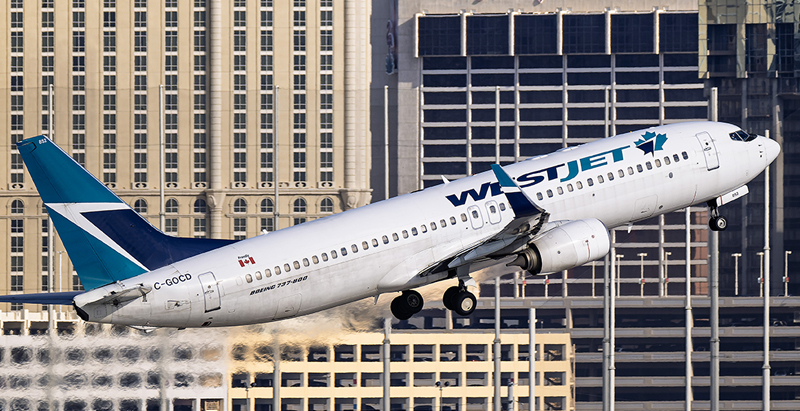
It wasn’t a whisper of news on September 3, 2025, when WestJet publicly announced what’s being called a record-breaking aircraft order with Boeing. The deal includes 67 new jets: 60 narrow-body Boeing 737 MAX 10s and seven wide-body 787-9 Dreamliners. WestJet also secured options for 25 additional MAX 10s and four more Dreamliners, which could bring the total order significantly higher. With this, WestJet now holds the largest Boeing order book of any Canadian airline, boasting 123 firm aircraft commitments. This signals a bold and aggressive shift for WestJet as it sets itself up for a new era of growth and international reach.
This isn’t just about modernizing the fleet. WestJet is actively positioning itself for expansion, both in terms of route network and market share. The 737 MAX 10s are purpose-built for high-density, short- to medium-haul routes across Canada and North America, offering more seats and improved fuel efficiency compared to older narrow-body models. Meanwhile, the addition of seven 787-9 Dreamliners effectively doubles WestJet’s wide-body fleet, unlocking serious potential for new long-haul routes into Europe, Asia, and Latin America. The airline has said these aircraft are not just a replacement strategy but a critical part of scaling up and reducing fuel consumption. Given that WestJet’s current fleet averages around 10 years in age, this is also a timely step to refresh the airline’s backbone with more modern and environmentally efficient aircraft.
This order also reflects a broader industry trend. For Boeing, the deal is a strong vote of confidence after years of scrutiny, production setbacks, and regulatory challenges. WestJet’s willingness to make a massive commitment now shows that Boeing has, at least in part, repaired its reputation among major global carriers. From WestJet’s perspective, the timing aligns with a post-pandemic rebound in global travel demand. As more travelers return to the skies, airlines with newer, more efficient fleets are better positioned to grow, compete, and win loyalty. WestJet’s strategy is clearly about capitalizing on that moment, combining fleet renewal with capacity expansion to build a future-ready network.
For travelers, this move could lead to tangible changes. With more Dreamliners, WestJet is likely to launch new long-haul destinations or increase flight frequency to existing ones, especially in underserved international markets. Onboard experiences may also improve, as newer aircraft typically offer better cabin pressure, lower noise levels, improved air quality, and more modern in-flight entertainment systems. WestJet could also use these new aircraft to roll out differentiated service tiers or redesigned seating options. If more planes enter service, travelers may see more scheduling flexibility, and depending on market dynamics, possibly more competitive fares as well. Additionally, fuel-efficient planes could give WestJet more room to operate profitably at lower price points, which may benefit value-conscious passengers.
Of course, nothing in aviation is guaranteed, and big fleet orders bring their own risks. While WestJet has placed its bet, the success of this strategy depends on smooth execution. MAX 10, for example, is still undergoing certification and is not expected to enter commercial service until at least 2026. So, while the long-term strategy is in motion, the near-term impact is limited. There’s also the risk of economic turbulence, fuel price volatility, or global events that suppress travel demand. These factors could disrupt the airline’s revenue model or slow the expected return on investment. Operationally, scaling up a fleet this quickly puts pressure on crew training, maintenance programs, airport infrastructure, and customer service, any of which could become pain points if not carefully managed.
WestJet’s move could put pressure on its rivals. In Canada, the airline faces stiff competition from Air Canada, Porter, and emerging ultra-low-cost carriers. More planes and more destinations don’t automatically equal more profit. How effectively WestJet integrates these jets into its network and uses them to deliver meaningful value to travelers will determine whether the order pays off. Additionally, Boeing must fulfill its end reliably. With continued attention on its production and quality control, any delays or reliability issues could create downstream effects for WestJet’s rollout.
Stepping back, WestJet’s decision also reveals a deeper strategic approach. By sticking with Boeing across both narrow-body and wide-body fleets, WestJet strengthens its operational efficiency. Commonality across aircraft types makes training, maintenance, spare parts inventory, and scheduling more streamlined and cost-effective. This approach builds long-term resilience and operational consistency. At the same time, the airline appears to be preparing for broader international connectivity, especially as it deepens partnerships with global players like Delta and Korean Air, who have invested in the airline and aligned networks. With that kind of backing, a more capable fleet opens the door to new codeshares, joint ventures, and shared hubs beyond Canadian borders.
There’s also a sustainability layer to this. Modern aircraft like the MAX and Dreamliner families are significantly more efficient than previous generations. They burn less fuel, produce fewer emissions, and meet stricter noise regulations. WestJet’s order therefore positions it not just for commercial advantage but for regulatory and environmental alignment, which is becoming increasingly important for global carriers as carbon reduction mandates loom.
The timeline for delivery stretches all the way to 2034, which means the benefits of this move will unfold gradually. In the near term, travelers won’t see dramatic changes overnight, but by the late 2020s and early 2030s, WestJet’s route map, service quality, and aircraft lineup could look very different. The first indicator to watch will be which long-haul routes the airline opens with its expanded Dreamliner fleet. Also, key will be how the airline positions its MAX 10s: whether as replacements for aging jets or to launch more point-to-point city pairs across Canada and North America. Cabin upgrades, fare class restructuring, and loyalty program enhancements may also follow as the airline modernizes.
Ultimately, WestJet’s massive Boeing order is a major pivot. It reflects not just confidence in Boeing, but a clear vision of the airline’s future. It’s a statement of intent to scale, to compete, and to grow into a truly international carrier with a modern, efficient fleet. For travelers, this means more options and, hopefully, a better flying experience. For Boeing, it’s a sign that even after years of turbulence, major airlines still see them as central to the next chapter of commercial aviation.
 Spotify
 Apple Podcasts
 Podbean
 YouTube