
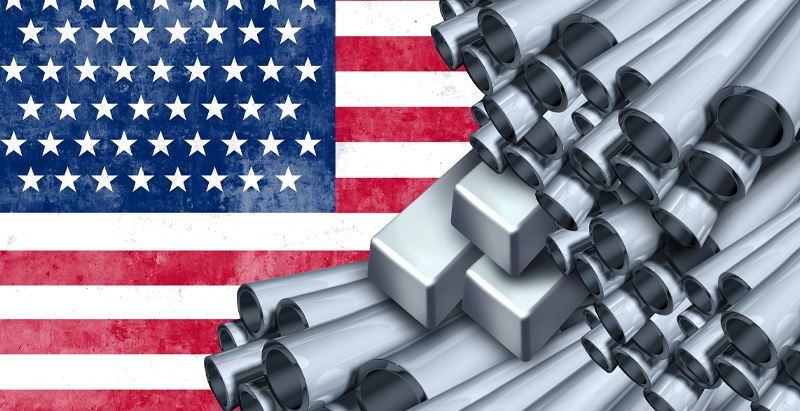
The U.S. steel market in 2026 feels like a story of cautious optimism mixed with real uncertainty. After the pandemic rebound, key demand indicators are sending mixed signals about how robust steel demand will be this year. While demand is not collapsing, important drivers of steel consumption from consumer confidence to construction and auto production are showing signs of softness that could keep growth muted.
Let’s break down the latest numbers and what they mean for producers, buyers, and the broader industrial economy.
When you talk about the mood of the American economy, few measures matter as much as consumer confidence. In January 2026 the Consumer Confidence Index plunged to 84.5, the lowest reading since 2014 and down nearly 10 points in one month. That steep drop pushed the Expectations Index a measure of future sentiment all the way down to 65.1, well below levels usually associated with recession risk. Economists at The Conference Board noted that all five components of the index weakened, suggesting the pullback in confidence isn’t isolated to one slice of the economy.
That matters for steel demand because consumer attitudes often translate into real behavior. When people feel uneasy about the future, they tend to postpone big purchases things like cars, homes, and appliances, all categories that consume lots of steel. Dana Peterson, chief economist at The Conference Board, described the January slump as a “collapse” in confidence, highlighting the depth of the decline.
Construction has historically been a cornerstone of steel consumption, and the data here paints a complicated picture. Total U.S. construction spending remained high in absolute terms, at an annualized $2.17 trillion in October 2025, but it was down year-on-year, even if it ticked up slightly from the prior month. Residential buildings, non-residential projects, and public works all pull different parts of the steel market. Residential construction still showed some momentum, but industrial construction spending was notably weaker.
This mixed performance aligns with broader industry forecasts. Major construction data firm Dodge Construction Network expects overall U.S. construction starts to grow about 4 percent in 2026, driven by data centers and power infrastructure, even as cost pressures and financing challenges persist.
Another forward-looking gauge, the Architecture Billings Index, remained below 50 the cutoff that signals expansion versus contraction at 48.5 in December 2025, indicating that architectural work pipelines were still shrinking. Many firms reported project delays and cancellations, which often lead to postponed steel orders.
Then there’s the auto sector. U.S. light vehicle assembly rates, a direct driver of steel demand for sheet and structural products, were running softer late last year around 9.46 million units annualized in December 2025. While not disastrous, this pace is below the robust output levels seen during the post-pandemic rebound and suggests flat-rolled steel consumption from automotive could be more subdued this year. Other analysts expect auto steel demand to be stable to modestly positive in 2026 despite shifting vehicle market conditions, including a potential overall decline in vehicle sales and transitions in electric vehicle demand.
There are some bright spots. Steel shipments in late 2025 showed strength: U.S. mills shipped nearly 91 million net tons of steel that year, up 4.9 percent from 2024, reflecting ongoing demand from construction, automotive, and manufacturing.
Tariffs on foreign steel imports have also reshaped the domestic industry, reducing import share significantly and supporting U.S. producers. Nucor reported that imported steel’s share of U.S. consumption dropped from about 25 percent to under 15 percent by late 2025, a shift that helps domestic mills’ competitiveness.
Meanwhile, some broader economic data suggests potential support for manufacturing activity. The Institute for Supply Management’s manufacturing PMI rose above growth territory in early 2026, indicating expanding new orders and production momentum, which could trickle down to steel use.
What does all this mean for steel demand in 2026? Most industry outlooks including global and U.S. forecasts expect only modest growth. Some estimate overall steel consumption will improve in the low single digits, around 1.8 percent over the year, assuming continued gains in infrastructure, reshoring of industrial investment, and supportive trade policies.
But with consumer confidence near the lowest level in more than a decade, construction growth slowing compared with last year, architectural billings still contracting, and auto assembly rates softening, the steel market is best described as functioning but fragile. Demand looks steady, not booming and small shocks or policy shifts could swing pricing and utilization levels quickly.
In short, steel makers and buyers alike should watch these indicators closely. If confidence starts to rebound, construction pipelines strengthen, and auto production stabilizes, the steel market could find firmer footing. If not, demand may lag expectations and tighten pricing dynamics further.
 Spotify
 Apple Podcasts
 Podbean
 YouTube