
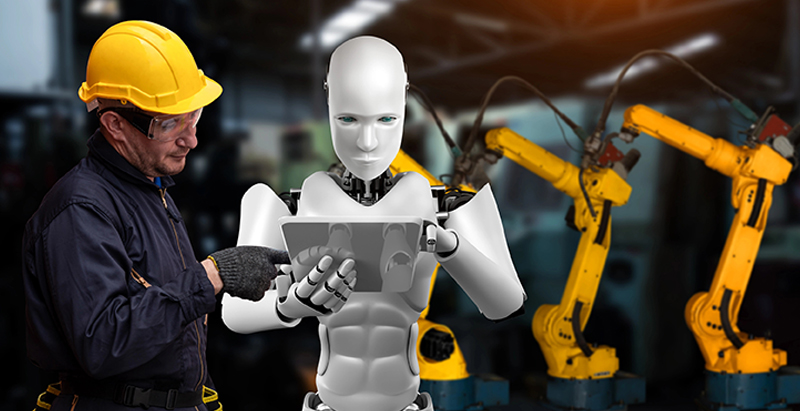
A survey of U.S. business leaders has revealed something sure to raise eyebrows: about three in ten companies say they’re planning to replace workers with AI within the next year.
Dig a little deeper, and the picture becomes both more concrete and more complex. Among those firms expecting AI-related layoffs, 59% say they plan to cut at least 10% of their workforce via AI replacement. Even more startling, about 10% of those firms expect to replace 50% or more of their staff.
So, what kinds of roles are at risk? The survey points to customer support, administrative/clerical jobs, IT, and technical support roles as especially exposed. And the industries noticing these shifts span manufacturing, retail, finance, human resources, and software/IT services.
But before the alarms start ringing too loudly, it’s not all doom and gloom. Other research suggests that while AI is changing work, the story isn’t simply “machines replacing humans and jobs disappearing.” For instance, a report from PwC shows that in sectors highly exposed to AI, wages are rising twice as fast compared to those in less-exposed sectors. In other words, AI might be making people more valuable in certain roles, not less.
Likewise, the Federal Reserve Bank of St. Louis published a study that found adoption of generative AI tools (like chatbots and content-creation tools) among workers rose from about 33% to ~37% between August 2024 and August 2025. Those users reported time savings equivalent to about 1.6% of all work hours, translating into up to a 1.3% increase in labor productivity.
Here are a few clear takeaways from all these:
- Roles that are routine + rules-based are the most vulnerable.
If a job involves repetitive tasks, clear rules, or high volume (think: administrative work, basic IT support, call-center work), those are the ones flagged by companies as most likely to get replaced. The survey said that for operations/back-office roles, 58% of firms plan to replace with AI, and for entry-level roles, 37% say they’re on the chopping block. - That means adaptation is key for workers.
If you’re in a highly routine job, you might ask yourself: What parts of my work cannot be automated easily? What skills do I have that are more human-centric (creativity, critical thinking, adaptability, leadership)? The World Economic Forum’s Future of Jobs Report 2025 highlighted that AI & big data top the list of fastest-growing skills, but so do things like resilience, creativity, and flexibility. - For employers: it’s not just about replacing people, but about rethinking work.
Businesses looking at AI are not always aiming for wholesale job cuts; some are seeking ways to increase staff, boost productivity, or shift roles. The Fed’s data shows AI is being used to save time and increase output rather than purely eliminate jobs. Also, a study by the Budget Lab at Yale University shows that despite fears, generative AI has not yet caused a dramatic shift in U.S. employment overall. - Training and reskilling matter more than ever.
Having AI tool-skills, digital literacy, and agility in your career are increasingly valuable. The McKinsey survey found that 94% of employees and 99% of executives report some familiarity with generative AI tools, but many employees feel underprepared and less comfortable using them. - The human and the machine are becoming partners, not always adversaries.
Academic work (for example, a 2024-25 paper by Mäkelä & Stephany) shows that while substitution is real (some tasks are replaced), the complementary effect (AI helping humans do more or better work) is up to 50% larger than the substitution effect.
Yes, the survey that started this discussion is real and significant: many companies say they plan to use AI to replace workers next year. But the bigger picture is more nuanced. AI is arriving fast, changing how work gets done, but it’s not simply about mass layoffs (at least not yet), and there’s a strong undercurrent of demand for skills, adaptability, and human-machine collaboration.
 Spotify
 Apple Podcasts
 Podbean
 YouTube