
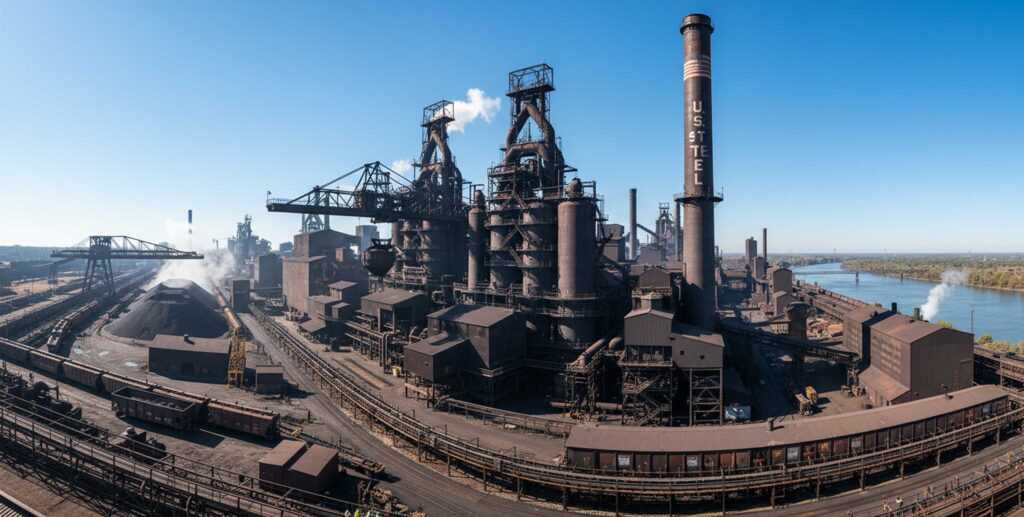
Companies that make steel, aluminum, and other metals around the world are suddenly paying a lot more attention to the United States. After years of quieter dealmaking, foreign metals manufacturers are increasingly buying, investing in, or partnering with U.S. producers not just on a whim, but as part of serious strategies to boost competitiveness and navigate an increasingly complex global market.
It all started dramatically. In June 2025, Japan’s Nippon Steel closed on its roughly $14 billion acquisition of U.S. Steel, a company many Americans still see as a symbol of the nation’s industrial backbone. That wasn’t just a big number; it was a message. For other metals industry leaders, it served as a wake-up call about how to position themselves for growth.
“That was the catalyst to say, ‘How do we get back into the U.S. in strategic ways?’” says Ian Myers, managing partner at Kalibr Partners. Many global players, he notes, began seriously asking whether they needed a deeper footprint in the U.S. to compete.
Tariffs and Trade Pressures
One of the biggest reasons foreign metals firms are looking at the U.S. more closely isn’t just demand, it’s tariffs. Since mid-2025, U.S. import duties on steel and aluminum have climbed as high as 50 percent for many countries. That kind of tax doesn’t just add cost; it reshapes the economics of selling metal into the world’s largest consumer market.
“International players recognize that to compete in the lucrative U.S. market, they must be physically present behind the tariff wall,” explains Randy Heisler, VP of metals for a consulting firm. For companies based in Japan, South Korea, or Europe, owning U.S. facilities suddenly becomes more than a convenience; it’s a competitive necessity.
That’s exactly what South Korea’s Posco is doing. Last year, the company signed a memo of understanding to take a stake in Cleveland-Cliffs, an American steelmaker, and separately invested in an electric arc furnace mill in Louisiana, moves that would cut into tariff exposure while expanding its role in U.S. aluminum and steel making.
Beyond Big Steel: Supply Chains and Specialization
The deals aren’t limited to the big steel names. Metal manufacturers are also thinking about other parts of the supply chain. Some are buying scrap recyclers and smaller service centers, which helps guarantee access to raw materials and potential feedstock for production. Germany-based Wieland, for example, has snapped up several copper and brass mills and even built a new smelter.
Experts point out another big reason for the rush: specialized end markets. Automotive steels for electric vehicles, materials for aerospace and defense, and metals used in data centers and electronics are all growing faster than commodity steel, and that makes companies involved in those niches more attractive to buyers.
A Slow Start, But Higher Hopes for 2026
The metals industry had what many dealmakers called a “slow” M&A year in 2025. Capstone Partners reported that activity was down about 30 percent compared with the year before, but many attribute that lull to uncertainty around tariffs and trade policy.
Now, with clearer tariff rules, ongoing demand for U.S.-made metals, and the continued influence of nearshoring strategies across global manufacturing, advisors expect activity to pick up in 2026. Smaller joint ventures, minority stakes, and acquisitions of specialized businesses are all on the table.
Dealmakers believe that interest will spread beyond big steelmakers to mid-tier service providers and specialized material producers. “Buyers are out there, and they’re pretty active,” says Michael Rosendahl, a managing director focused on metals and mining deals.
What These Moves Tell Us
What all these signals mean is that metals manufacturers long tied to the ups and downs of commodity markets are thinking much more strategically. They’re looking for physical presence in major markets, vertical control of supply chains, and niches that offer higher margins. At a time when global trade politics are in flux and domestic industrial policy is encouraging local production, the U.S. looks like one of the most attractive places to be.
Whether this trend leads to a reshaping of U.S. manufacturing or simply makes it more interconnected with global players remains to be seen. But one thing is clear: foreign metals companies see America not just as an export destination, but as a place to build and grow for the long term.
 Spotify
 Apple Podcasts
 Podbean
 YouTube