
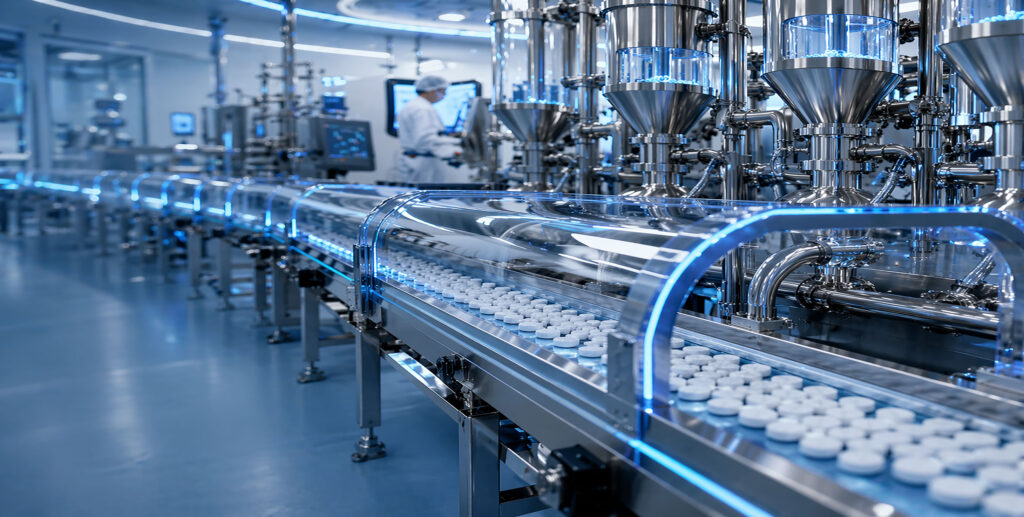
For most of its history, the pharmaceutical industry has depended on batch manufacturing. Drugs are produced in fixed quantities, tested after the fact, stored, and then released to the market. It’s a system that regulators are familiar with, but it’s also slow, space-intensive, and prone to inefficiencies. Continuous manufacturing offers a different model, one that industry leaders say could reduce costs, minimize waste, and enhance the resilience of drug supply chains.
In continuous manufacturing, production runs nonstop. Raw materials are fed into the system, and finished medicines come out the other end without the start-and-stop cycle that defines batch processing. While this approach has been standard in industries like chemicals and food for decades, pharma has been cautious. Changing how a drug is made can trigger new regulatory reviews, and the upfront investment in equipment, data systems, and training is substantial.
The data advantage is one of the strongest arguments for making the switch. Continuous lines generate real-time data at every stage of production. Sensors track temperature, pressure, flow rates, and quality attributes continuously, rather than relying on end-of-batch testing. Manufacturing experts note that in batch operations, products often sit in storage while companies wait for quality approval. Continuous manufacturing reduces the need for inventory, which can significantly shrink warehouse space and holding costs.
That data volume is not trivial. A single continuous production line can generate thousands of data points per second. According to industry estimates, this can increase data storage and management needs by several multiples compared with batch processes. However, advocates argue the payoff is worth it. Real-time monitoring allows manufacturers to detect deviations immediately and correct them before large amounts of product are affected. Instead of scrapping an entire batch, companies can isolate a short window of material, saving time and money.
Cost and efficiency data support that claim. Industry analysts have found that continuous manufacturing can reduce production costs by 15% to 30% over time, largely due to lower material waste, fewer shutdowns, and smaller facility footprints. Some studies also suggest it can cut production timelines in half, reducing the time from raw materials to finished products from weeks to days.
Still, the transition isn’t easy. Regulatory hurdles remain a major obstacle. Switching an approved drug from batch to continuous manufacturing often requires additional filings and validation work with regulators like the U.S. Food and Drug Administration. That process can take months or even years. One manufacturing executive described continuous manufacturing as “front-loaded,” meaning companies must invest heavily in people, process design, and validation long before they see financial returns.
Despite those challenges, adoption is accelerating, especially among large players. Thermo Fisher Scientific operates a continuous manufacturing line for oral solid dose drugs at its North Carolina facility, demonstrating that the technology can run reliably at commercial scale. Pfizer has gone even further, building dedicated continuous manufacturing facilities in the U.S. and Europe. The company has said it expects roughly 70% of its small-molecule medicines to be produced using continuous methods within the next decade.
Government interest is also pushing the industry forward. Policymakers increasingly see advanced manufacturing as a way to prevent drug shortages and strengthen domestic supply chains. Public investments and proposed legislation have focused on making it easier for companies to adopt modern manufacturing technologies, including continuous production, particularly for essential medicines.
Quality is another major factor. Academic and industry researchers have shown that continuous manufacturing can improve product consistency by maintaining tighter control over critical quality attributes. Continuous monitoring reduces variability, which is one of the leading causes of batch failures. In an industry where a single failed batch can represent millions of dollars in losses, that matters.
Even so, continuous manufacturing isn’t a one-size-fits-all solution. Not every drug is suitable for continuous production, and older facilities may require costly retrofits. Companies also need workers with hybrid skills in manufacturing, data science, and automation, a talent mix that’s still in short supply.
What’s clear is that momentum is building. As data becomes central to how medicines are made, continuous manufacturing aligns naturally with the industry’s push toward automation, artificial intelligence, and real-time quality control. As one industry veteran put it, the goal isn’t novelty, but predictability: making medicines faster, with less waste, and fewer surprises.
Batch manufacturing isn’t disappearing anytime soon. But as continuous systems prove their value, production lines that never stop running may soon become a defining feature of modern pharmaceutical manufacturing rather than an exception.
 Spotify
 Apple Podcasts
 Podbean
 YouTube