
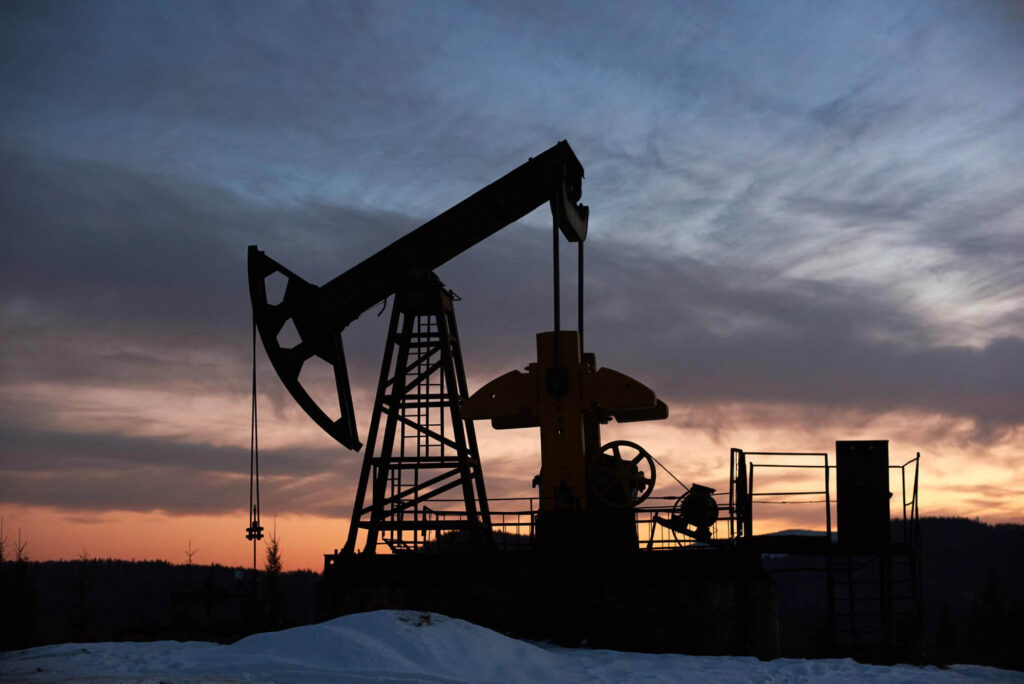
Let’s be honest, 2025 has been a strange year for oil and gas. On one hand, production is roaring. The U.S. hit record highs. Big oil companies are pulling in massive volumes. And the global supply engine isn’t slowing down just yet. But under the surface, there are warning signs: drilling activity is cooling, demand growth is stalling, and even the strongest producers are starting to hedge their bets.
So what’s really happening?
First, the headline: U.S. crude oil production is on track to average 13.4 million barrels per day (mb/d) in 2025, up from 12.9 mb/d in 2024. In the second quarter of 2025, production even spiked to an all-time quarterly high of 13.5 mb/d, beating every record in the books, according to the U.S. Energy Information Administration (EIA).
Natural gas didn’t miss the party either. Dry gas output grew from 103.2 billion cubic feet per day (bcfd) in 2024 to 105.2 bcfd in 2025, another record.
And this surge isn’t just about quantity, it’s about productivity. Thanks to better drilling techniques, like longer lateral wells and multi-pad operations, oilfields, especially in the Permian Basin, are getting more out of less. That means fewer rigs but higher yields.
The Permian Basin, stretching across West Texas and southeastern New Mexico, continues to be the heart of the action. Chevron and ExxonMobil both reported big production gains in the region in early 2025, 14% for Chevron, 16% for Exxon. That’s not just growth; it’s acceleration.
Driving these are two major trends: technology and consolidation. Horizontal drilling is now so refined that wells are going deeper and staying productive longer. And then there’s the deal-making. In late 2024, Exxon bought Pioneer Natural Resources for $60 billion, giving it a huge Permian footprint. Chevron acquired Hess, gaining access to Guyana’s booming offshore production.
With these moves, ExxonMobil hit 4.63 million barrels of oil equivalent per day (boe/d) in Q2, while Chevron reached 3.4 million boe/d, towering over their European rivals like Shell and BP.
Despite record output, U.S. oil and gas rig activity is sinking. In 2019, the rig count hovered above 1,000. Today, it’s closer to 540, according to Baker Hughes data. That’s a massive drop, and it’s starting to concern analysts.
According to Rystad Energy, this sharp decline could knock 400,000 bpd off U.S. production by late 2026. The Permian alone might lose 150,000 bpd if new drilling doesn’t pick up.
The Dallas Fed Energy Survey confirms the slowdown. Oil and gas production indexes fell into negative territory in Q2 2025, with oil at –8.9 and gas at –4.5. That means more companies are reporting declines than growth, the first in a while.
In short, we’re seeing a delayed effect. High output today, but potential softness tomorrow.
Outside of America, other players are stepping up. Non-OPEC countries, particularly Brazil, Canada, and Guyana, are adding 1.3 mb/d of the total 1.8 mb/d global supply growth in 2025. That’s a major shift away from OPEC-centric dominance.
Even Saudi Arabia and Kuwait made headlines in May with a new oil discovery in the Partitioned Zone, though the initial output, about 500 barrels per day, is modest by global standards.
In Canada, Cenovus Energy had to dial back its 2025 production guidance to 805,000–825,000 boepd, down from 845,000, due to unexpected hiccups like Alberta wildfires and equipment issues.
Meanwhile, Egypt is leaning hard into natural gas, boosting production at the Zohr field by 220 million cubic feet per day and inking a $3 billion LNG export deal with Shell and TotalEnergies for 60 cargoes. Egypt is playing the long game, focusing on being an East Mediterranean gas hub.
While supply is heating up, demand growth is cooling. The EIA and IEA both forecast global oil demand to rise by only 700,000–720,000 bpd in 2025. That’s the slowest growth in over a decade, excluding pandemic years.
Why the slowdown? Several factors: EV adoption is climbing. China’s recovery is softer than expected. Energy efficiency is improving worldwide.
With OPEC+ planning to increase supply by 2.2 mb/d, including 548,000 bpd starting in September, the risk of oversupply is very real. Yet many traders remain skeptical that OPEC+ will deliver all that oil, which has helped keep Brent crude hovering around $69/barrel.
Still, the EIA sees global inventories building by 800,000 bpd in 2025, and another 600,000 bpd in 2026, putting downward pressure on prices if demand doesn’t surprise to the upside.
Beyond rigs and barrels, 2025 is also shaping up to be the year oil and gas got smarter.
Artificial intelligence is increasingly being used to optimize well placement, predict equipment failures, monitor emissions and safety, and improve energy trading algorithms.
While we’re still in early stages, the promise is clear: more output, less waste, faster decisions. Companies that embrace this digital edge, like Shell, Equinor, and Chevron, are already seeing efficiency gains that could help them ride out tighter margins ahead.
2025 feels like a contradiction. On the surface, oil and gas are booming. Beneath that, signs point to tightening margins, slowing drilling, and a possible plateau in production. The giants, Exxon, Chevron, and Saudi Aramco are still winning. But it’s no longer about brute force. It’s about precision, adaptability, and technology.
We’re at the edge of a new era. Not post-oil, not yet, but post-business-as-usual.
The real question isn’t whether we can produce more oil. It’s whether we should and whether the industry can adapt fast enough to a world that’s shifting gears.
 Spotify
 Apple Podcasts
 Podbean
 YouTube