
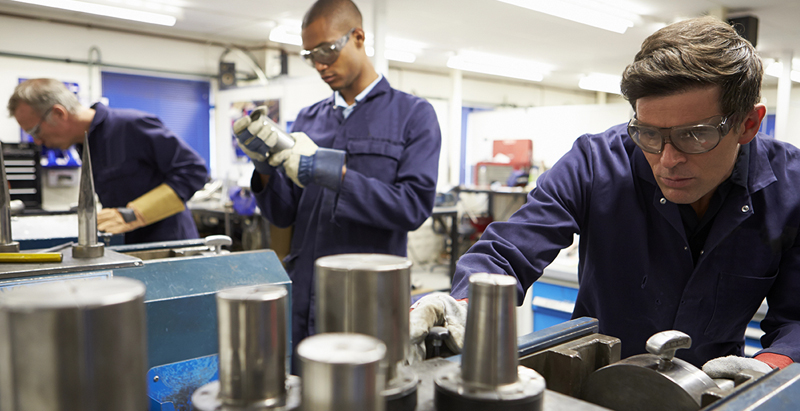
Manufacturers across the country are rethinking what workforce development should look like, and the timing could not be better. Events like Manufacturing Month each October give companies another chance to connect with future workers, clear up old misconceptions about factory jobs, and show that this is an industry where people can build strong careers.
The push for new training models did not come out of nowhere. Even before the pandemic, manufacturers were facing a major talent shortage. A well-known Deloitte study estimated that nearly two million jobs could sit unfilled if trends continue. Darrell Edwards, an assistant professor of practice in supply chain management at the University of Tennessee, points to one long-running cause. As manufacturing moved overseas, many high schools scaled back hands-on skills training, steering young people toward four-year degrees as the only “real” path. Now, companies bringing production back to the U.S. are discovering a sharp shortage of electricians, welders, machinists, and other skilled trades.
Alan Amling, who co-authored a white paper on reshoring with Edwards, puts it plainly. If the country wants to expand manufacturing at home, it needs a large, steady pipeline of trained workers on both the trade and technology sides.
Federal funding, private innovation, and academic partnerships are helping fill those gaps. Major public-private networks like Manufacturing USA and the Manufacturing Extension Partnership have long supported training, apprenticeships, and certification programs. Laws such as the Workforce Innovation and Opportunity Act and the CHIPS and Science Act add even more fuel by supporting education tied to advanced manufacturing and semiconductors.
Companies are improving, too. Kellanova’s plant in Jackson, Tennessee, built a custom electrical and instrumentation training program with the Tennessee College of Applied Technology. Students train in a classroom designed to match the plant’s equipment, so their first day on the job feels familiar. The program lasts 16 months and has already funneled dozens of graduates into E&I roles. According to Manuel Lopez-Portillo, who oversees North American supply chain operations, the benefit is clear. New hires come in already understanding the machines, which shortens the learning curve and improves safety.
But getting people into these programs is not always easy. Pella Corp., a window manufacturer, knows that interest starts early. The company brings students into its plants, pairs interns with mentors, and works closely with schools and community organizations. Laura Phillips, Pella’s VP of engineering and procurement, says these efforts help students see the variety of careers available, not just the outdated image of factory work.
Some programs are built specifically to reach groups that traditional recruiting often misses. The Uniquely Abled Project is one example. Founded by former engineering professor Ivan Rosenberg, it provides training for adults on the autism spectrum by focusing on their strengths and helping employers understand the value they bring. The program’s 12-week CNC machining course includes 420 hours of instruction, OSHA training, and industry certifications. More than 300 students have completed it so far, and the model has expanded to 31 locations across 16 states.
The project works because it is designed to be replicated. Local partner schools run the programs and build relationships with nearby manufacturers who hire graduates. The biggest challenge is funding. Each student costs between $5,000 and $6,000 to train, and while some programs receive state support, the need still outweighs the resources.
As reshoring accelerates, factories are becoming more automated, and that changes the skill sets companies need. Edwards points out that automation is not a replacement for people. Instead, it raises the bar. Workers now need to understand how to operate, maintain, and troubleshoot technology, from robotics to AI-based planning tools.
This means training must start early, whether in high schools, technical colleges, or employer-run programs. Companies like Pella see automation as a way to capture institutional knowledge and make demanding jobs safer and more accessible. Rather than eliminating roles, the goal is to help employees improve their skills and use technology as a partner.
Amling and Edwards reach the same conclusion in their research. Automation may change the nature of manufacturing work, but it will not reduce the need for human talent. If anything, it increases the need for people with blended skill sets who can work across disciplines.
Manufacturing is changing fast, and so are the pathways into the field. Whether through high-tech training labs, community partnerships, or inclusive programs for underserved groups, companies are broadening the on-ramps to a career in the industry. The need is clear, the demand is high, and the companies that succeed will be the ones that show future workers that they have a place in this modern manufacturing landscape.
 Spotify
 Apple Podcasts
 Podbean
 YouTube