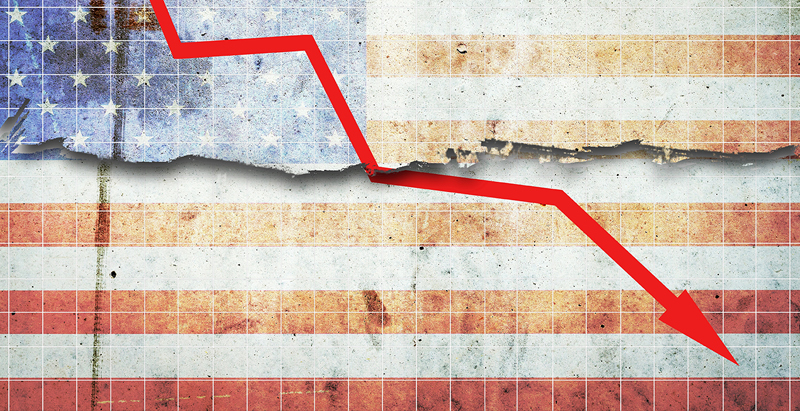
The latest data from the Institute for Supply Management (ISM) paints a sobering picture of the U.S. manufacturing sector as it continues to lose steam. In October, the Manufacturing PMI® registered at 48.7%, marking the thirteenth month of contraction out of the last fourteen and the eighth consecutive month below the neutral 50% line. Any reading under 50 indicates that manufacturing is shrinking rather than growing, and this prolonged downturn is raising concerns about how much longer the sector can limp along without stronger support from demand or policy shifts.
One of the most notable components of the report is the New Orders Index, which increased slightly to 49.4% from 48.9% in September. While this minor increase might sound encouraging, it still reflects shrinking order volumes. In simple terms, companies aren’t seeing a meaningful uptick in demand for goods, and that has a ripple effect across the entire supply chain. Production activity reflects that same weakness, with the Production Index falling 2.8 points to 48.2%. That’s a sharp reversal from September, when production managed to stay in positive territory. It suggests manufacturers are pulling back on output in response to soft demand and rising uncertainty.
Employment continues to be another pain point. The Employment Index came in at 46.0%, which, although slightly improved from September’s 45.3%, still indicates that manufacturing jobs are being cut. Companies are cautious about hiring or retaining workers when the order books aren’t full. In fact, some are even trimming labor in anticipation of a potentially weaker holiday season and the possibility of continued demand stagnation well into the new year.
Supplier Deliveries also moved in a direction that hints at broader concerns. The index rose to 54.2%, which may seem positive since it indicates slower deliveries. Normally, that would point to strong demand overwhelming supply chains. But in the current environment, it likely reflects supply-side challenges, such as transportation delays, reduced production schedules at upstream suppliers, or uncertainty, causing buyers to delay orders, not a rush of incoming business.
Inventory trends paint a similar picture. The Inventories Index dropped to 45.8%, meaning manufacturers are depleting their stock rather than replenishing it. This signals hesitance to invest in raw materials or finished goods without clearer signs of market strength. Interestingly, Customers’ Inventories remained too low, at 43.9%. That suggests retailers and end-users haven’t overstocked — a condition that would typically lead to new orders. But again, new demand just hasn’t materialized.
One area that continues to move upward is prices. The Prices Index came in at 45.1%, which is still in contraction territory but moving closer to 50. It shows that while prices for raw materials aren’t rising sharply, inflationary pressure is still in the background. That’s consistent with a broader economy where inflation has cooled but not disappeared, and input costs remain a concern, especially in sectors like chemicals, metals, and electronics.
Exports and imports remain weak. The New Export Orders Index came in at 44.5%, and Imports sat at 45.4%. Both indicate contraction, and both reflect ongoing pressure from global trade instability. Tariffs, shipping costs, and geopolitical tensions are still putting a damper on international business, limiting how much U.S. manufacturers can lean on overseas markets for growth.
What’s more, the voices from within the industry reflect growing frustration. A respondent from the Chemical Products sector reported that “business continues to remain difficult, as customers are cancelling and reducing orders due to uncertainty in the global economic environment and regarding the ever-changing tariff landscape.” Another, from the Fabricated Metal Products industry, said, “Sales continue to underperform… the remainder of the year outlook is not looking better.” These on-the-ground perspectives highlight a broader sentiment: uncertainty is the rule, not the exception.
The big picture? While the broader U.S. economy might still be expanding modestly, manufacturing is not keeping pace. ISM analysts estimate that October’s PMI corresponds to roughly a +1.8% increase in real GDP, a figure that implies growth is happening elsewhere, like in services or consumer spending. Manufacturing, however, is a key indicator of long-term economic health, especially in terms of capital investment, employment, and exports. Its continued contraction is not something to ignore.
A few sectors did manage to show growth in October, including Food, Beverage & Tobacco Products, and Transportation Equipment. These bright spots, however, are not enough to offset declines in other major industries. In total, nine manufacturing industries reported contractions, and only two reported growth. That’s a stark imbalance that reinforces the idea that the sector’s slowdown is widespread and not confined to a single segment.
In summary, October’s PMI numbers confirm what many manufacturers are already feeling: the recovery is stalled. Orders are weak, hiring is down, and inventories are being managed cautiously. The longer this lasts, the harder it will be for manufacturers to pivot back to growth mode without either a major shift in demand or policy-driven stimulus. For now, the message is clear: manufacturing is waiting on the sidelines, hoping for the next signal to jump back in.
 Spotify
 Apple Podcasts
 Podbean
 YouTube