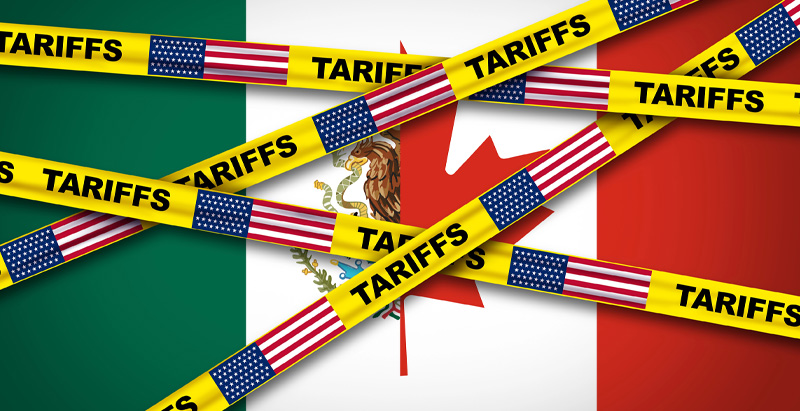
The United States-Mexico-Canada Agreement (USMCA) was supposed to give North American manufacturers a stable, tariff-free trading zone. But recent moves by the U.S. government to impose tariffs and rethink trade policy have left many companies uneasy about where to make, ship, and sell their products.
Manufacturers and supply chain leaders are telling anyone who will listen that this uncertainty is hurting confidence. In an October 2025 Manufacturing Dive article, companies said they were hesitant to nearshore operations to Mexico or Canada while the USMCA review looms and tariff policies change on a near-daily basis. Some are leaning hard on tariff exemptions and regional supply chains just to keep costs predictable.
What USMCA Meant and What’s Happening Now
When USMCA replaced NAFTA in 2020, it was marketed as a modernized, win-win trade deal that would support manufacturing and give U.S. exporters better access to Canadian and Mexican markets. In 2022, for example, trade between the three countries hit about $1.8 trillion, including nearly $790 billion in U.S. exports, showing how deeply knit the manufacturing ecosystem is across the continent.
Trade groups like the National Association of Manufacturers point out that under USMCA, about one-third of key U.S. inputs come from Canada or Mexico instead of higher-cost countries like China, making tariff exemptions under the deal critical to keeping costs low and supply chains predictable.
But in recent months, the U.S. has flirted with levying broader tariffs on goods from Canada and Mexico, partly justified as responses to security concerns and alleged unfair trade practices. In some proposals, tariffs on imports outside the USMCA terms could reach 25% or more.
Business Reaction: Hesitation and Strategic Shifts
Across industries, executives say this uncertainty has real consequences. Companies that depend on smooth cross-border supply chains from automotive parts to electronics and machinery are grappling with questions like: Will this part be hit by tariffs next quarter? Does it still qualify under USMCA rules? Should we relocate production?
One practical example: Stanley Black & Decker publicly acknowledged that tariffs have pressured their costs and distorted their supply chain planning. The company raised prices and retooled its sourcing to reduce exposure to tariff-vulnerable imports, while shifting more supply to Mexico to stay within USMCA compliance and reduce duty exposure.
These kinds of reactions are mirrored across sectors, with some businesses delaying investment or re-evaluating where they make components and final products.
Why Manufacturers Are Uneasy
There are a few big reasons for the jitters:
- Tariff unpredictability: U.S. tariff policy has become harder to forecast. Some tariffs are suspended temporarily, while higher duties have been imposed on steel, aluminum, and other materials, even though the USMCA was supposed to prevent many such tariffs on compliant goods.
- Retaliation and trade tensions: Canada and Mexico haven’t just sat still. Canada has imposed retaliatory duties on certain U.S. products, especially steel, aluminum, and autos, when disputes escalated earlier this year.
- Mixed political signals: Statements from political leaders like recent U.S. comments questioning the relevance of USMCA keep businesses guessing about the future of the agreement and how aggressively tariffs might be used.
Even when USMCA exemptions are held, the mere threat of duties on non-compliant products adds paperwork, compliance costs, and risk to every cross-border shipment.
Stakes for America’s Economy
The economics behind all this show why manufacturers care so much. North American trade isn’t small potatoes: together, the U.S., Mexico, and Canada make up nearly one-third of global GDP and are tightly interwoven in manufacturing supply chains.
Tariffs can also have ripple effects. Estimates suggest that broad 25 % tariffs on Canadian and Mexican goods could tack hundreds of billions of dollars annually onto manufacturing costs that might get passed to consumers in higher prices. And when that happens, businesses must consider whether to shift production, alter sourcing, or delay investment, all decisions that affect jobs and local economies.
Looking Ahead
The USMCA is set for a formal review in 2026, and officials from all three countries say they want to preserve the agreement, even as disagreements simmer. Mexican leaders, for instance, recently reiterated that the treaty will endure despite U.S. skepticism.
For manufacturers, the key will be clarity and stability. Right now, though, many in the U.S. sector are trying to balance tariff risk, regulatory changes, and nearshoring decisions, all while hoping that a more predictable trade environment emerges once the USMCA review is completed.
In the meantime, the lesson for factories and supply chain managers is this: integrated North American manufacturing remains crucial, but the playbook may be shifting fast.
 Spotify
 Apple Podcasts
 Podbean
 YouTube