
Summary
U.S. manufacturers are struggling to find enough tech-savvy workers as automation, AI, robotics, and digital production tools become essential to modern operations. Industry leaders say the solution requires stronger training pipelines, better collaboration with educators, clearer career pathways, and more hands-on exposure to advanced manufacturing technologies.
Why Manufacturers Need More Tech-Skilled Workers
Manufacturing is transforming faster than the workforce can keep up. Plants now rely on automation, robotics, digital twins, AI-driven quality systems, and advanced analytics, but many workers lack the technical skills required to operate, maintain, and optimize these tools.
The challenge is not just filling open jobs; it’s preparing workers for roles that didn’t exist a decade ago. As technology adoption accelerates, manufacturers need employees who can troubleshoot automated systems, interpret data, manage digital workflows, and collaborate with advanced machines. Without a stronger pipeline of tech-capable talent, productivity gains stall and modernization slows.
How Hands-On Training Builds Confidence and Skills
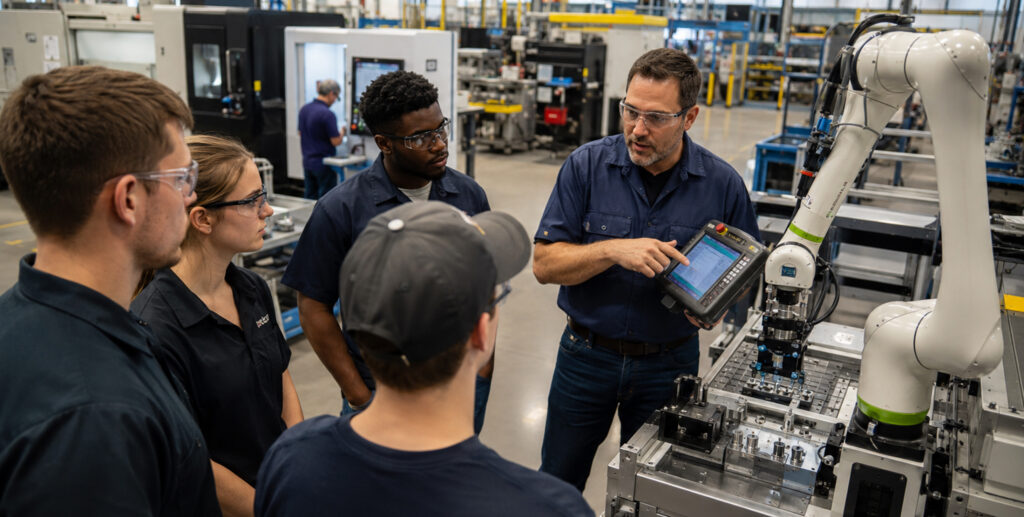
Experts say the most effective way to build a tech-savvy workforce is through hands-on exposure to real manufacturing technologies. Workers learn faster when they can physically interact with robots, sensors, CNC machines, and digital-production systems rather than only reading about them.
Training centers, mobile labs, and on-site demonstrations help workers understand how modern manufacturing tools function and how they fit into daily operations. This approach also reduces fear and uncertainty, two major barriers preventing workers from embracing automation and AI.
Why Manufacturers Must Partner More Closely with Educators
Schools and training programs often struggle to keep pace with rapidly evolving industrial technology. Many rely on outdated equipment or curricula that no longer reflect modern plant environments.
Manufacturers are increasingly collaborating with community colleges, technical schools, and workforce-development organizations to update programs, donate equipment, and co-design courses. These partnerships ensure students learn relevant skills and graduate ready to contribute immediately.
Industry-aligned education also helps younger workers see manufacturing as a high-tech, future-focused career rather than a legacy industry.
Creating Clear Career Pathways to Attract New Talent
Workers are more likely to pursue manufacturing careers when they understand the long-term opportunities available. Clear pathways from entry-level technician roles to automation specialist, robotics operator, or digital-manufacturing engineer help candidates visualize growth.
Manufacturers are beginning to map these pathways more transparently, showing how workers can advance through training, certifications, and on-the-job learning. This approach helps attract younger workers who value career mobility and skill development.
What This Means for the Future of U.S. Manufacturing
A more tech-savvy workforce is essential for maintaining competitiveness in 2026 and beyond. Manufacturers that invest in training, partnerships, and hands-on learning will adopt automation faster, improve productivity, and strengthen supply-chain resilience.
Those that fail to modernize workforce development risk falling behind as digital manufacturing becomes the industry standard.
Key Takeaways
- Manufacturers urgently need more tech-skilled workers to support automation and AI adoption.
- Hands-on training builds confidence and accelerates learning.
- Stronger partnerships with educators help modernize training programs.
- Clear career pathways attract younger workers and support long-term retention.
- A tech-savvy workforce is essential for competitiveness, productivity, and modernization.
FAQ
Why do manufacturers need tech-savvy workers?
Modern plants rely on automation, robotics, AI, and digital tools that require advanced technical skills.
How can manufacturers train workers more effectively?
Hands-on training with real equipment helps workers build confidence and learn faster.
Why are partnerships with schools important?
They ensure students learn relevant skills using modern equipment and industry-aligned curricula.
How do career pathways help attract talent?
They show workers how they can grow into higher-skill, higher-pay roles through training and experience.
 Spotify
 Apple Podcasts
 Podbean
 YouTube