
Summary
The FDA has launched a series of new initiatives to strengthen domestic drug manufacturing, expand advanced-technology adoption, and reduce U.S. dependence on foreign pharmaceutical supply chains. The actions focus on modernizing production, improving quality oversight, supporting innovation, and increasing the availability of essential medicines manufactured in the United States.
Why the FDA Is Prioritizing Domestic Drug Manufacturing
The U.S. pharmaceutical supply chain has faced years of pressure from global disruptions, foreign dependency, and shortages of essential medicines. A significant portion of active pharmaceutical ingredients (APIs) and finished drugs is produced overseas, leaving the U.S. vulnerable to geopolitical instability, export restrictions, and manufacturing failures abroad.
The FDA’s new actions aim to reverse this trend by encouraging more domestic production, improving supply-chain transparency, and supporting advanced manufacturing technologies that make U.S. facilities more competitive. Strengthening domestic capacity is now seen as a national-security priority, especially for critical medicines, sterile injectables, and drugs with limited suppliers.
Key FDA Actions to Support U.S. Drug Manufacturing
The FDA outlined several initiatives designed to modernize and expand domestic pharmaceutical production. These include new regulatory guidance, expanded technical support for manufacturers, and programs that accelerate the adoption of advanced manufacturing technologies such as continuous manufacturing and modular production systems.
The agency is also increasing collaboration with federal partners to identify supply-chain vulnerabilities, support innovation, and encourage investment in U.S.-based facilities. These efforts are intended to reduce shortages, improve quality consistency, and ensure that essential medicines remain available during global disruptions.
How Advanced Manufacturing Improves Drug Quality and Reliability
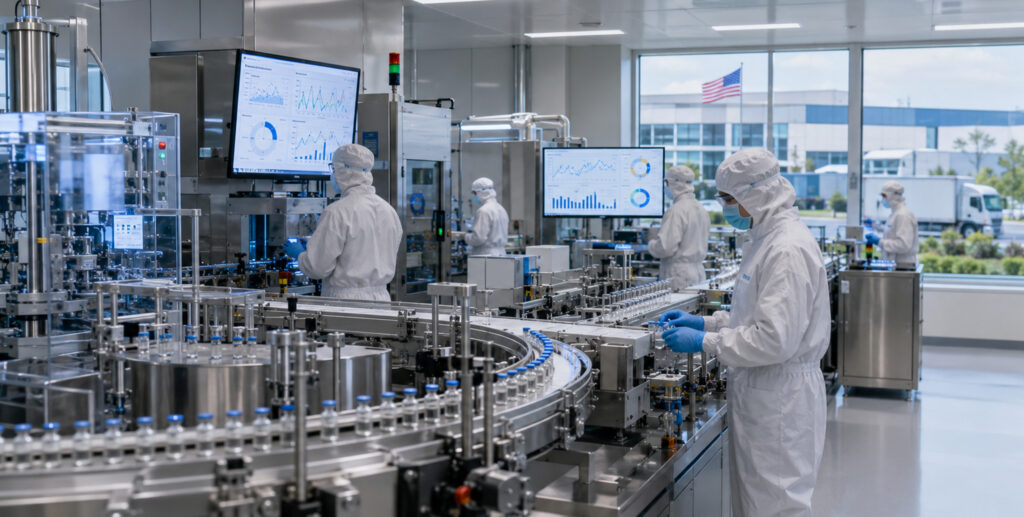
Advanced manufacturing technologies, including continuous manufacturing, automation, and real-time quality monitoring, allow drug makers to produce medicines more efficiently and with fewer interruptions. These systems reduce batch variability, improve sterility assurance, and shorten production timelines.
The FDA has repeatedly emphasized that modernized facilities are more resilient, more cost-effective, and better equipped to maintain a consistent supply. By supporting the adoption of these technologies, the agency aims to help U.S. manufacturers compete globally while improving patient access to high-quality medicines.
What This Means for Patients, Manufacturers, and the U.S. Economy
For patients, the FDA’s actions promise fewer drug shortages and more reliable access to essential medicines. For manufacturers, the initiatives reduce regulatory uncertainty, encourage modernization, and create clearer pathways for adopting advanced technologies.
For the broader U.S. economy, stronger domestic drug manufacturing means reduced reliance on foreign suppliers, improved national-security readiness, and greater resilience during global crises. The FDA’s strategy aligns with federal efforts to rebuild critical supply chains and strengthen domestic production of essential goods.
Key Takeaways
- The FDA announced new actions to strengthen domestic drug manufacturing.
- Initiatives focus on advanced manufacturing, supply-chain resilience, and innovation.
- The agency aims to reduce U.S. dependence on foreign pharmaceutical production.
- Advanced technologies improve drug quality, consistency, and reliability.
- Stronger domestic manufacturing supports national security and patient access.
FAQ
Why is the FDA focusing on domestic drug manufacturing?
To reduce foreign dependency, prevent shortages, and strengthen national security resilience.
What advanced technologies is the FDA promoting?
Continuous manufacturing, automation, real-time quality monitoring, and other modern production systems.
How will these actions help patients?
They improve supply reliability, reduce shortages, and ensure consistent access to essential medicines.
Who benefits from the FDA’s initiatives?
Patients, U.S. drug manufacturers, healthcare providers, and the broader national-security and economic ecosystem.
 Spotify
 Apple Podcasts
 Podbean
 YouTube