It might not sound like the most exciting topic, but last month’s ISM® Manufacturing PMI® report is a big deal for anyone watching the U.S. economy. In January 2026, the U.S. manufacturing sector showed signs of life after more than a year of contraction, and that’s something economists, investors, and business leaders will be talking about for weeks.
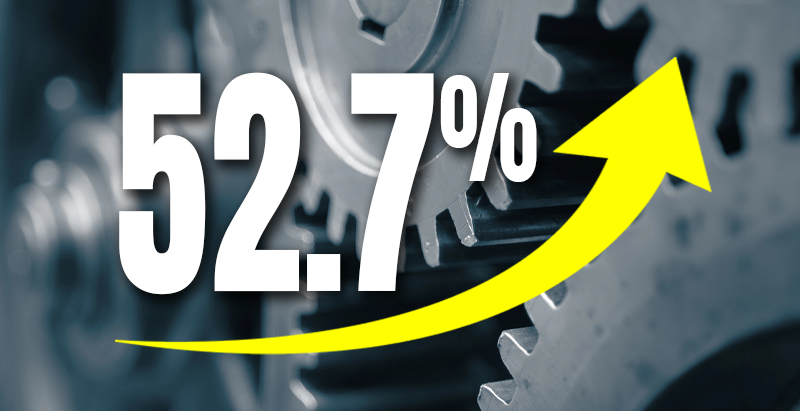
At the center of that discussion is the Manufacturing PMI®, a monthly index produced by the Institute for Supply Management® (ISM®) that gives an early snapshot of how factories are faring. A reading above 50 percent generally means manufacturers are expanding; below that means contraction. For January, the headline number came in at 52.6 percent, marking **the first expansion in 12 months and up a sizeable 4.7 points from December’s 47.9 percent.
Manufacturers clearly breathed a sigh of relief after two years of falling output, and that uptick helped lift overall U.S. economic activity already in expansion mode for 15 straight months, into slightly firmer territory.
That’s important because the manufacturing sector, though smaller than services, touches everything from auto parts to high tech. And while it only makes up about 11–12 percent of U.S. GDP, changes here often ripple out into broader business confidence and hiring decisions. (That context comes from broader economic research on PMI indicators as business barometers.)
What’s Behind the Surge?
Going deeper, the monthly report tracks a suite of subindexes. These help tell a more detailed story about what’s moving and what’s not:
| Subindex | January | December | Change |
Direction |
| PMI® | 52.6 | 47.9 | +4.7 | Growing |
| New Orders | 57.1 | 47.4 | +9.7 | Growing |
| Production | 55.9 | 50.7 | +5.2 | Growing Faster |
| Employment | 48.1 | 44.8 | +3.3 | Contraction — Slower |
| Supplier Deliveries | 54.4 | 50.8 | +3.6 | Slowing |
| Inventories | 47.6 | 45.7 | +1.9 | Contracting — Slower |
| Prices | 59.0 | 58.5 | +0.5 | Increasing |
Source: ISM January 2026 PMI Report
New Orders Returning, Production Rebounds
The standout stat is New Orders, which jumped to 57.1 percent, the strongest reading since early 2022, a sign that demand might actually be picking up.
Production also surged to 55.9 percent, suggesting factories are not only getting more orders but fulfilling them. That’s the third month in a row that production has increased.
Employment Still Weak — But Improving
The Employment Index, however, remains below 50 at 48.1 percent, meaning manufacturers are still cutting jobs, just not as fast as before. That fits with other surveys showing employment in manufacturing has been one of the weaker spots in the U.S. labor market, even as overall jobs remain relatively healthy.
Prices and Supply Chains
Another noteworthy number: the Prices Index stayed elevated at 59 percent, meaning input costs are still rising, a trend that’s been persistent for 16 straight months. Higher raw material and supply costs, especially for metals and freight, were mentioned across many industries.
Is This a Durable Rebound or Just a Blip?
There’s good reason for cautious optimism but also for skepticism.
On the plus side, the improvement in new orders and production suggests that some companies may be rebuilding inventories after running down stocks late last year. For the U.S. economy overall, PMI readings above the breakeven level historically correspond with modest GDP growth. ISM analysts estimate around a 1.7 percent annualized gain based on January’s data.
But some economists warn this could partly be seasonal restocking after the holidays, or firms buying early to avoid tariff-driven price hikes. Others point out that the rebound is not yet broad enough: employment remains weak, and many manufacturers still cite global trade uncertainty as a drag.
What This Means for the Broader Economy
When you look beyond manufacturing, other parts of the U.S. economy are also showing mixed but mostly positive signals. For example:
- The U.S. services sector continued its expansion streak at 53.8 percent, marking its 19th straight month of growth.
- Eurozone and global PMI reads show slower momentum but still marginal growth in some regions.
- Other major economies like China have seen contraction in their official manufacturing PMI, underscoring persistent global demand weaknesses.
Bottom Line
So, what should readers take away from this report?
The U.S. manufacturing sector showed the most encouraging reading in over a year, breaking its long contraction streak and signaling stronger new orders and production. But the rebound isn’t perfect. Employment remains under strain, prices are rising, and uncertainties like trade policy and tariffs still weigh heavily on business sentiment.
Still, in a world where economic data is often mixed, a return to expansion in one of the most closely watched business surveys is a welcome surprise, one worth paying attention to as the year unfolds.
 Spotify
 Apple Podcasts
 Podbean
 YouTube