
Summary
Rapid advances in AI and humanoid robotics are triggering urgent policy discussions in the U.S. about safety standards, workforce impacts, national competitiveness, and responsible deployment. Experts argue that without updated regulations, testing frameworks, and federal guidance, the country risks falling behind global rivals while exposing workers and consumers to unmanaged risks.
Why AI-Driven Robotics Are Creating New Policy Challenges
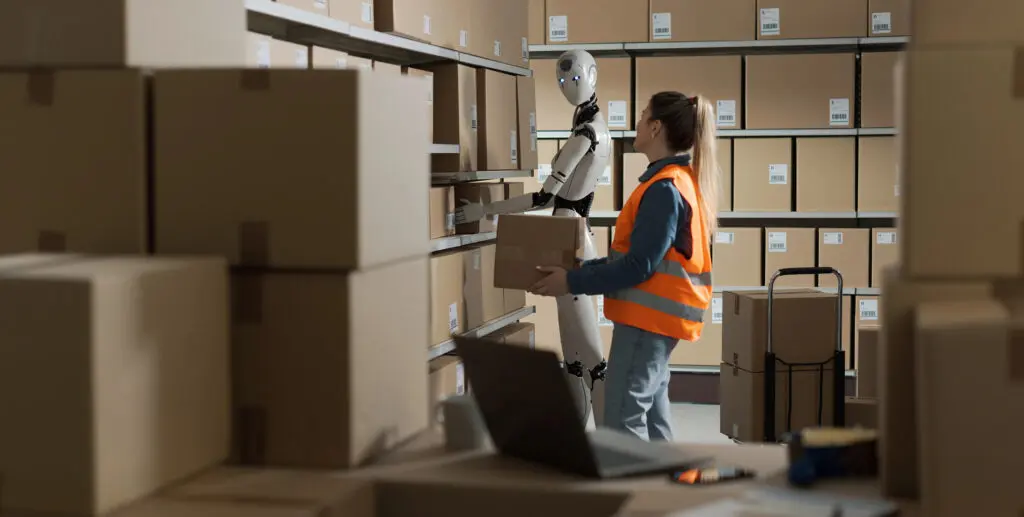
The Hill reports that humanoid robots now capable of mobility, manipulation, autonomous decision-making, and AI-driven perception are advancing faster than existing U.S. regulatory frameworks. Traditional robotics rules were built for stationary industrial arms, not mobile machines that can navigate workplaces, interact with people, or perform complex tasks.
As companies pilot humanoid robots in warehouses, factories, and logistics centers, policymakers face questions about liability, safety certification, workforce displacement, and ethical use. Technology’s speed of development is outpacing the government’s ability to set standards.
Safety Standards and Testing Requirements Are Lagging Behind Technology
Current U.S. safety regulations do not fully address:
- Mobile robots operating near human workers
- AI systems making autonomous decisions
- Physical interaction between robots and people
- Edge-case failures in unpredictable environments
- Cybersecurity risks tied to connected robotics platforms
Experts warn that without updated testing protocols, certification pathways, and federal oversight, humanoid robots could introduce new workplace hazards. The Hill notes that Europe and Asia are moving faster on robotics safety frameworks, creating pressure for the U.S. to catch up.
Workforce Impacts: Augmentation vs. Displacement
Humanoid robots are being deployed to perform repetitive, dangerous, or physically demanding tasks from warehouse picking to machine tending. Supporters argue that robots will augment workers, reduce injuries, and fill labor gaps.
But critics warn that large-scale deployment could displace workers in logistics, manufacturing, and service industries. Policymakers are debating:
- How to protect workers during transitions
- Whether retraining programs should be federally funded
- How to ensure robots complement rather than replace human labor
- How AI-driven automation affects long-term wage growth
The Hill emphasizes that workforce strategy must evolve alongside robotics adoption.
National Competitiveness: The U.S. Risks Falling Behind
Countries including China, Japan, and South Korea are investing heavily in humanoid robotics, creating national programs to accelerate development, testing, and deployment.
The Hill reports that without similar federal coordination, the U.S. could lose ground in:
- Advanced manufacturing
- Defense robotics
- Industrial automation
- AI-driven mobility systems
- Global robotics standards setting
Experts argue that robotics leadership is tied directly to economic competitiveness and national security, making policy modernization a strategic priority.
What Policymakers Say Needs to Happen Next
- Updated Safety and Certification Standards
Clear rules for testing, deployment, and workplace integration.
- Federal Coordination Across Agencies
Unified guidance from OSHA, NIST, DoD, DOE, and other agencies.
- Workforce Transition Programs
Retraining, upskilling, and support for displaced workers.
- Investment in Domestic Robotics Manufacturing
To reduce reliance on foreign suppliers and strengthen industrial capacity.
- Ethical and Responsible AI Frameworks
Guidelines for autonomy, decision-making, and human-robot interaction.
Key Takeaways
- AI and humanoid robotics are advancing faster than U.S. policy frameworks.
- Safety standards for mobile, autonomous robots remain incomplete.
- Workforce impacts are a major concern as robots enter factories and warehouses.
- Global competitors are moving faster on robotics strategy and regulation.
- Experts call for updated standards, federal coordination, and workforce programs.
FAQ
Why are humanoid robots creating new policy challenges?
They introduce mobility, autonomy, and human-interaction capabilities not covered by traditional robotics rules.
What safety concerns exist today?
Lack of testing standards, unclear liability, cybersecurity risks, and unpredictable human-robot interactions.
Will humanoid robots replace workers?
Experts say robots may augment workers, but displacement risks exist without strong workforce-transition programs.
Why does this matter for national competitiveness?
Countries investing heavily in robotics could outpace the U.S. in manufacturing, defense, and automation leadership.
 Spotify
 Apple Podcasts
 Podbean
 YouTube
 Spotify
 Apple Podcasts
 Podbean
 YouTube