
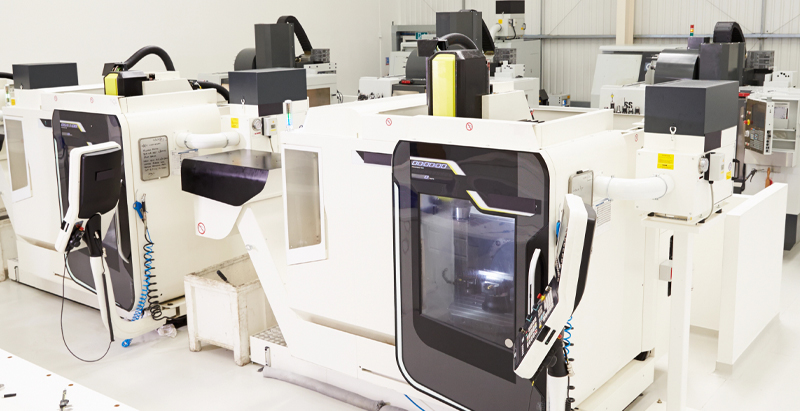
U.S. manufacturers ended the year on a strong note, with machine tool orders surging again in October. According to the latest U.S. Manufacturing Technology Orders (USMTO) report from AMT, the Association for Manufacturing Technology, companies booked $538.9 million in new CNC machining equipment that month. As AMT put it, “both the value and the number of units ordered in October were the highest since March 2023.” It was also the third time in 2025 that monthly orders cleared the $500 million mark, a frequency not seen since 2021.
What makes this spike notable is that it reflects not just more spending, but a shift in the type of technology being purchased. AMT has been tracking a rise in average order values across the year, a sign that companies are leaning more heavily into automation. The group said this trend “underscores the increased demand for automation at all levels of the supply chain.” Manufacturers aren’t just buying more machines; they’re buying more capable ones.
October numbers show how strong the momentum has become. Orders were 9% higher than in September and a striking 40.3% higher than in October 2024. Looking at the year, U.S. manufacturers have ordered $4.47 billion in machining technology through the first ten months of 2025. That’s 19.7% higher than in the same period last year.
One reason for the jump is policy. AMT attributes part of October’s increase to renewed tax incentives for capital equipment, which encouraged companies to move forward with upgrades they may have delayed earlier in the year. Strong consumer spending and government-backed manufacturing programs also played a role by giving companies more confidence to expand capacity.
A good example comes from contract machine shops, often called job shops, which make up the largest buyer segment for CNC equipment. In October, they posted their highest order values since March 2023. Interestingly, they ordered the same number of units they did a year earlier, but at 13.2% lower total value. That mismatch shows how pricing and machine capability can shift: shops are seeking higher-end systems, often with integrated automation, but are navigating fluctuating machine costs at the same time.
Aerospace manufacturers also increased their technology purchases in October, which stands out because it happened during a strike at Boeing Defense and during an extended government shutdown. Despite those disruptions, long-term demand for aircraft components, missile systems, and defense tooling appears to be strong enough to keep investment moving.
Another area showing notable growth is industrial engines, turbines, and power-transmission equipment. AMT reports a “significant increase” in orders from this group. That aligns with broader trends such as the rapid construction of data centers, which require large-scale power infrastructure, and efforts to extend the life of aging coal-fired power plants while the grid transitions to new energy sources.
Regionally, the picture is mixed. The West saw the biggest month-to-month jump, with orders climbing to 51.7%, followed by the Northeast at 32.9%. The North Central-East region rose slightly at 6.3%, but the other three regions slipped. Compared with last year, though, every region except North Central-West remains well ahead of 2024’s pace, which reinforces the broader national growth story.
Taken together, the numbers point to a manufacturing sector investing aggressively in the next production cycle, driven by automation, renewed policy incentives, and demand from industries modernizing or expanding rapidly. The October spike doesn’t guarantee smooth growth ahead, but it does signal that companies are preparing for it.
 Spotify
 Apple Podcasts
 Podbean
 YouTube
 Spotify
 Apple Podcasts
 Podbean
 YouTube