
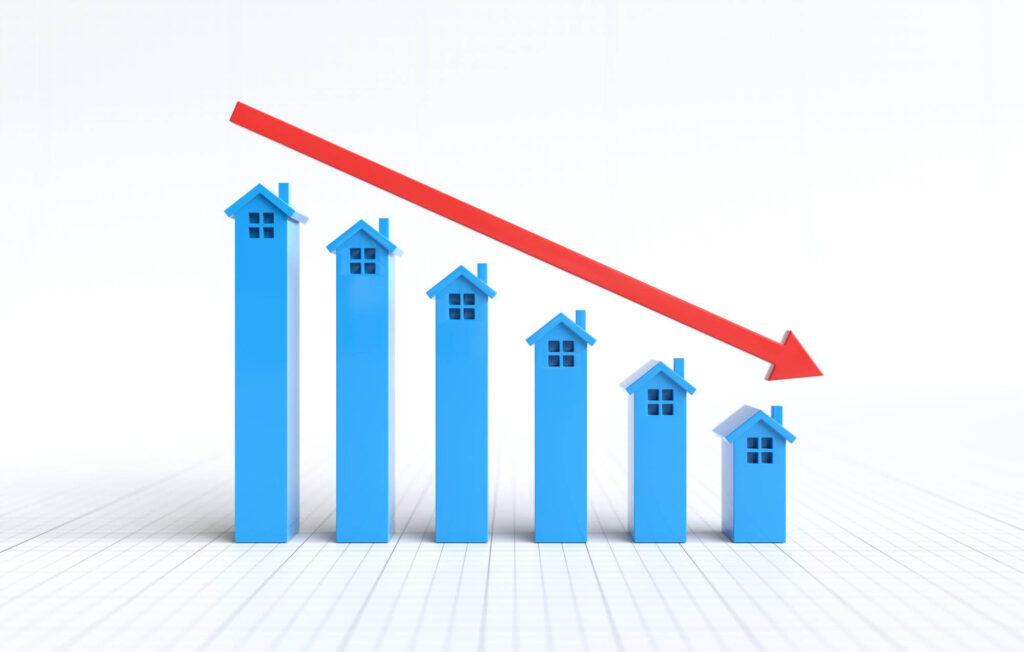
The U.S. housing market isn’t just cooling; it’s freezing key sectors of American manufacturing.
Carrier Global Corp., one of the biggest names in residential HVAC (heating, ventilation, and air conditioning), recently slashed its outlook for the year, warning that residential volumes could be 40% lower than in 2024. That’s not a blip, it’s a nosedive. And Carrier isn’t alone.
Data from the Air-Conditioning, Heating and Refrigeration Institute backs this up: air conditioner shipments plunged 33% in July, and heat pump deliveries dropped 18%. CEO Dave Gitlin was blunt at a recent Morgan Stanley conference: “We were obviously taken a bit by surprise.” He added that Q3 volumes are on track to be the worst in over a decade.
This isn’t isolated to HVAC. The broader slowdown in new home construction and existing home sales, driven by high interest rates, inflation, and consumer hesitation, is beginning to infect multiple industries connected to residential development.
According to Bloomberg Intelligence, new single-family home sales are now expected to fall by low- to mid-single digits in 2025, a reversal from earlier expectations of growth. And when homes aren’t being built or bought, there’s less demand for everything that goes in or under them, HVAC units, plumbing, tools, and even basic infrastructure.
Core & Main Inc., which supplies waterworks like pipes and valves, just lowered its 2025 guidance, citing a significant drop in lot development. What started as a cautious pullback in Q1 is now a full-fledged slowdown. CEO Mark Witkowski described the shift as a “whipsaw” that’s catching suppliers off guard.
Meanwhile, Stanley Black & Decker has downgraded expectations for its tool and outdoor equipment business. Its CFO, Patrick Hallinan, pointed to weaker-than-expected consumer demand, saying, “The DIY consumer… kind of ebbs and flows with the political mood.”
That mood is clearly shifting.
Even companies far removed from housing are feeling the pinch. McDonald’s CEO Chris Kempczinski said traffic from lower-income customers is down by double digits. Middle-income households are pulling back, too.
Colgate-Palmolive reported declining toothbrush and toothpaste demand, not a great sign when people are extending the life of a $3 item. CEO Noel Wallace told Barclays that customers are “using their toothbrushes longer and keeping fewer tubes at home.”
If people are cutting back on toothpaste, how long before they postpone buying a new air conditioner?
Barclays analyst Julian Mitchell summed it up in a stark note: “Toothpaste orders down, industrial equipment orders up’ may not be sustainable.” In other words, if consumers are slamming the brakes, businesses won’t be far behind.
The U.S. manufacturing sector, already shrinking as a share of GDP (just 10% in 2024, per the Department of Commerce), can’t outrun consumer slowdown forever. What’s happening in housing is the leading edge of a broader cooling.
While industrial and infrastructure spending has helped prop up the sector temporarily, especially under stimulus efforts like the Inflation Reduction Act and CHIPS Act, the foundation is cracking.
Distributors are now prioritizing inventory sell-off over new orders, fearing a glut of unsellable products. Carrier’s CFO Patrick Goris admitted their factories are “much less active than expected,” and Gitlin said the company is “taking some medicine” to reset expectations for 2026.
Even in stronghold regions like the Southeast and Florida, where demand stayed hotter longer, Witkowski of Core & Main said residential momentum is finally faltering. “Until these macro headwinds ease,” he warned, “we expect activity… will continue to soften through the second half.”
The Federal Reserve may be preparing to cut rates, but that won’t undo months of rising mortgage costs, sticker shock, and economic anxiety. As homebuyers hold off and consumers tighten belts, manufacturers from Carrier to Colgate are realizing this isn’t a soft landing. It’s a hard reset.
And in an economy where confidence drives everything from HVAC installations to toothbrush purchases, that reset could ripple far wider than the housing market.
 Spotify
 Apple Podcasts
 Podbean
 YouTube
 Spotify
 Apple Podcasts
 Podbean
 YouTube